Cinema São Jorge, Lisbon

A late Art Deco cinema in Lisbon

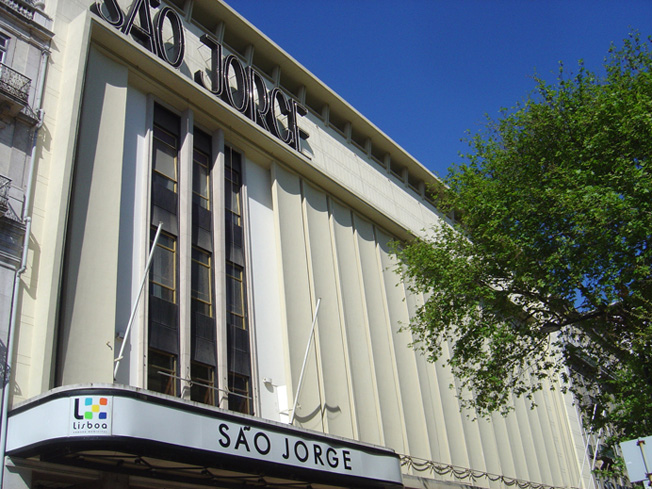
The Cinema São Jorge (Saint George) was financed by the Rank Organisation, a British film company, and built to provide a venue to show their films. The cinema was designed by the Lisbon-born architect Fernando Silva and constructed from 1947 to 1950. Located at Avenida da Liberdade, 175, the São Jorge was at this time the biggest cinema anywhere on the Iberian peninsula. It continued to function as a cinema into the twentieth century and was taken over in 2007 by Lisbon’s City Council who have continued this, sometimes running film festivals in it.

Modern sans serif lettering
Now run by Lisbon city council

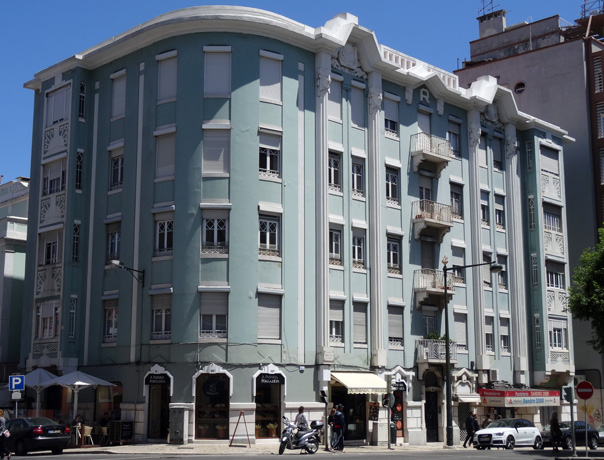
Avenida António Augusto de Aguiar 100, Lisbon

Avenida António Augusto de Aguiar 100 curves round the corner.

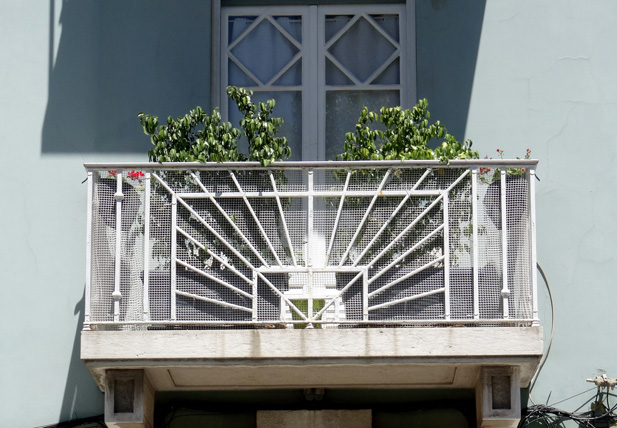
A striking building in Lisbon’s Saldanha district, this five-storey mix of retail and residential sits on the corner of the major artery that is Avenida António Augusto de Aguiar and the Rua Augusto dos Santos. Among the Art Deco details featured on it, highlighted in white against the prevailing green, are three different geometric sunbursts, one in wrought iron on a balcony and the other two below windows.

A metal sunburst.
Two similar sunbursts.
A metal window grate.

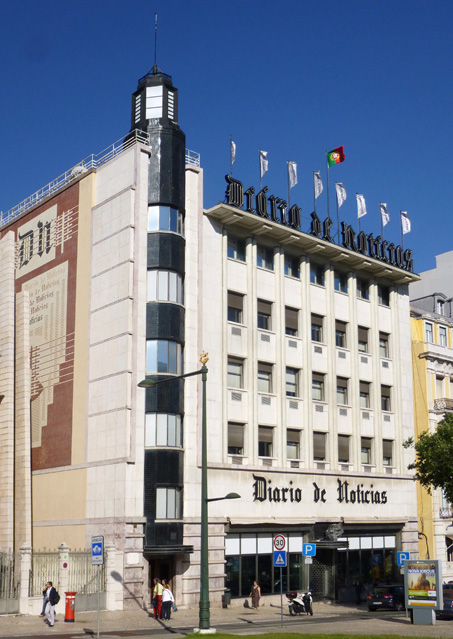
Diario de Noticias, Lisbon

A popular daily newspaper was produced here.

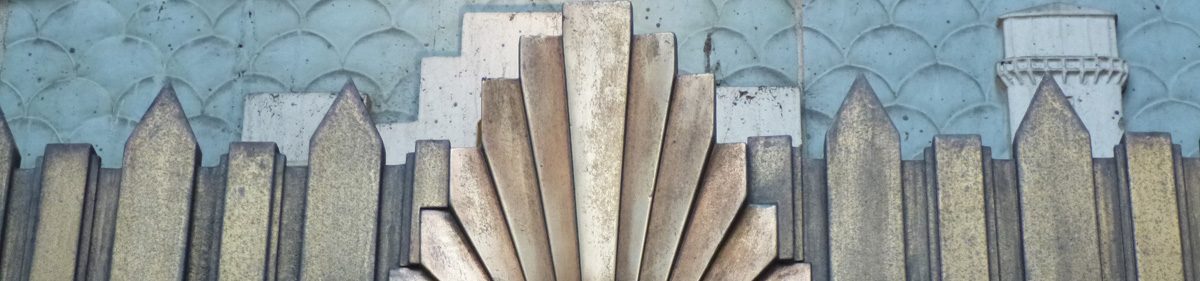
The daily newspaper Diario de Noticias has been published in Lisbon since 1864. This mid-twentieth century building, designed by the architect Porfirio Pardal Monteiro, won the Portuguese ‘Premio Valmor’ architectural prize in 1940. Located on the prestigious Avenida da Liberdade in the Rossio district, it united in one location all of the various functions of the newspaper, from editorial all the way to subscriptions, printing and distribution. It was listed as a National Monument in 1986. Note the embedded black tower on the left, complete with a lantern at the top, together suggesting a lighthouse. Recently it has been converted into luxury apartments.

The façade facing the Avenida da Liberdade.

Rua do Salitre 175, Lisbon

A French influence from the architect.

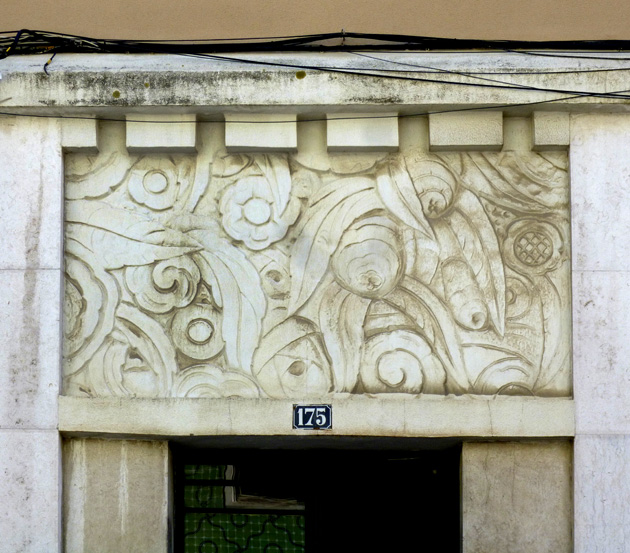
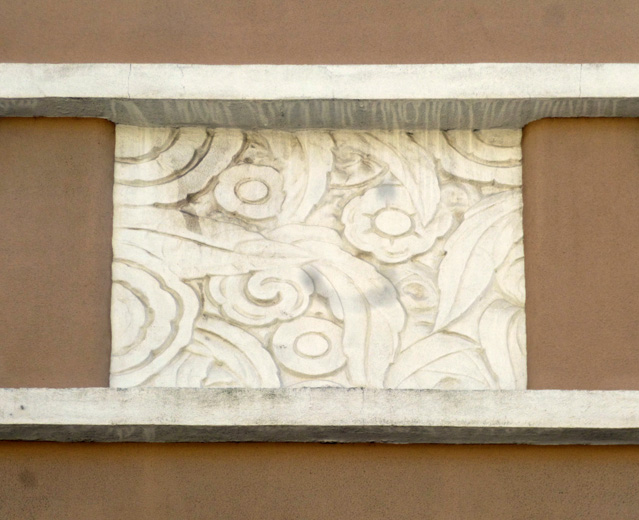
Here is a six storey apartment block located at Rua do Salitre 175 in the Rato district of central Lisbon. Its key colours are brown and white, and it has angular bay window towers rising from the third to fifth floors. Another feature is the carved, stone relief panels of flower arrangements which give a nod to the French designers who evolved them. These can be seen above the central entrance then between the windows on the floors above.

Flower arrangement above the main entrance.
More carved flowers and leaves.

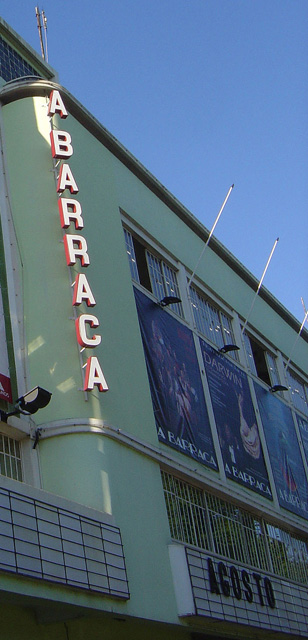
A Barraca, Santos, Lisbon

Once a cinema.

The Cinearte cinema, at 2 Largo de Santos, was constructed in 1938, and features some details which give it an industrial look. Designed by the architect Raul Rodrigues Lima, it ran as a cinema for over four decades, closing in 1981. It was reborn in 1990 as a theatre named ‘A Barraca’ or ‘The Shack’. ‘A Barraca’ has now been successfully bringing a new theatrical dimension to the Santos district for thirty years. Throughout the 1930s and 1940s Raul Rodrigues Lima designed a number of Portuguese cinemas, as well as courts and prisons.

A glass brick tower.

Ave. Praia da Vitoria, Lisbon

A four-storey residence.

On Lisbon’s Avenida Praia da Vitoria at numbers 17 and 19 we can find this pink apartment block. It has angular balconies, and stairwells that feature attractive bay windows. The photo below details the decorations on the wooden front doors.

This is a variation of the fountain motif.