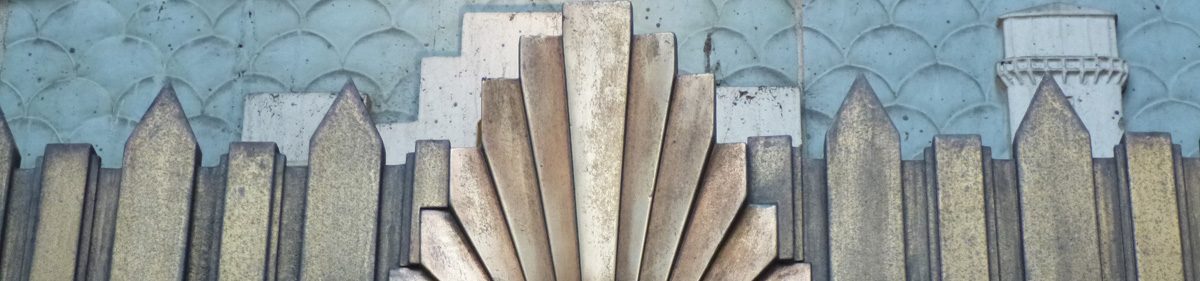
Rua do Salitre 175, Lisbon

A French influence from the architect.

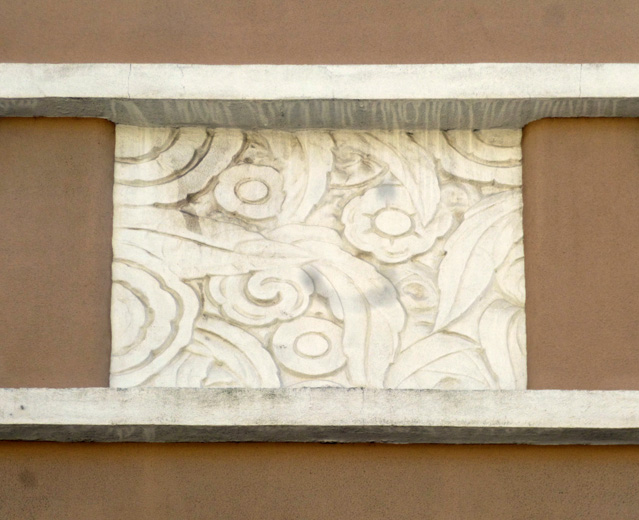
Here is a six storey apartment block located at Rua do Salitre 175 in the Rato district of central Lisbon. Its key colours are brown and white, and it has angular bay window towers rising from the third to fifth floors. Another feature is the carved, stone relief panels of flower arrangements which give a nod to the French designers who evolved them. These can be seen above the central entrance then between the windows on the floors above.
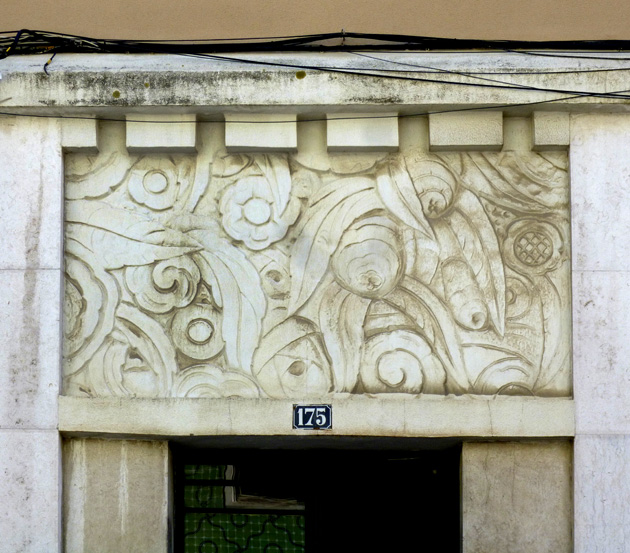
Flower arrangement above the main entrance.
More carved flowers and leaves.

Victoria Mansions, Durban

A diverse yet harmonious collection of decorative elements.

We are pleased to have a second guest post for this blog from the Durban Art Deco Society. Durban is South Africa’s third largest city and has many Art Deco buildings.

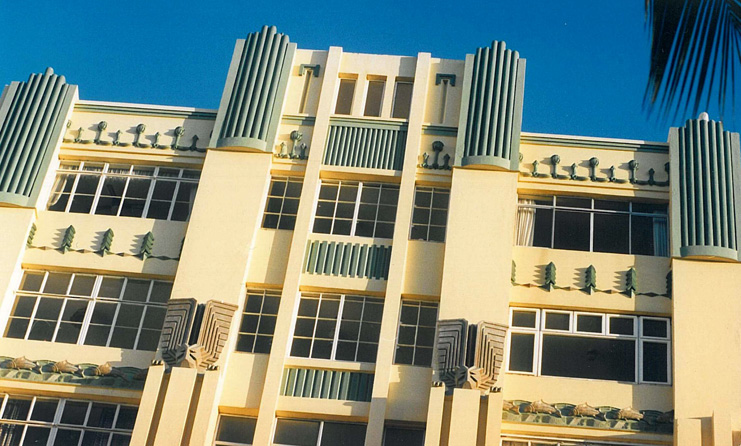
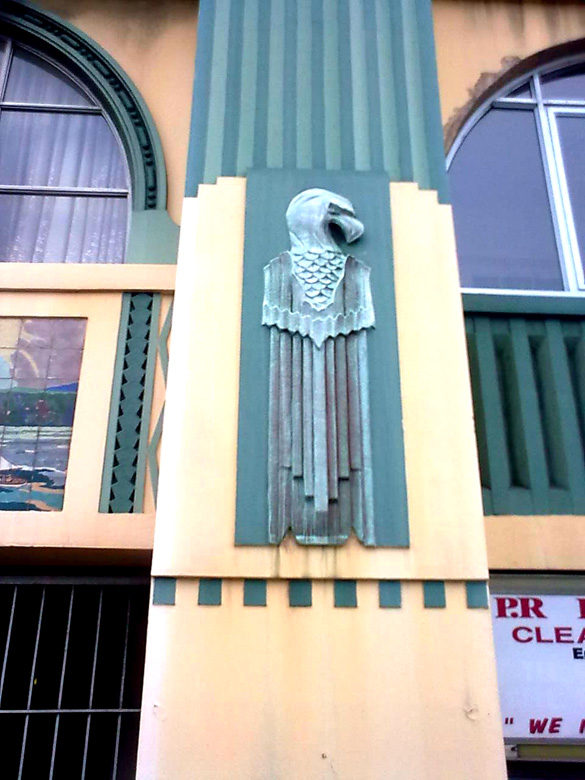
Situated at 124 Margaret Mncadi Avenue, Durban’s 1933 Victoria Mansions were designed by E S Cornelius. Victoria Mansions is an apartment building facing the bay across the Victoria Embankment. It has vertical pilasters with fluting which rise through an arcuated first floor. The facade is richly decorated with geometric patterns and an array of fantastical animal figures. Apart from dolphins and winged lions, it also has a vulture feature on the side panel of the entrance. The glazed tile panel over the entrance is a nostalgic memento of the days of the great Union Castle mail ships that called at Durban for so many years.

Photos and text © Durban Art Deco Society

A unique Art Deco vulture.
Another view of Victoria Mansions.

Clube Náutico Capibaribe, Recife

A Brazilian sports club.

These distinctive, sweeping curves belong to Clube Náutico Capibaribe, a sports club located on the Avenida Conselheiro Rosa e Silva, in the Aflitos district of Recife, a seaside city in in the northeast of Brazil. Initially a rowing club, hence the name, it is best known for its football team, often abbreviated to Náutico, which plays in the national Série B league.

A curving cornice on the central tower.

Mitre House, Brighton

Apartments near the seaside.

Constructed for International Stores in 1935, Mitre House In Brighton was designed by J. Stanley Beard & Bennett. Located in Western Road, it is mixed use with shops below and a six-storey block of flats above. As with many apartment blocks in England from this time there is a fine interplay between the brick and stone facings. The balconies are all faced with stone and rise from the second floor.

The main entrance to Mitre House.

Clinica do Carmo, Loulé (demolished)

A balance of horizontal and vertical.

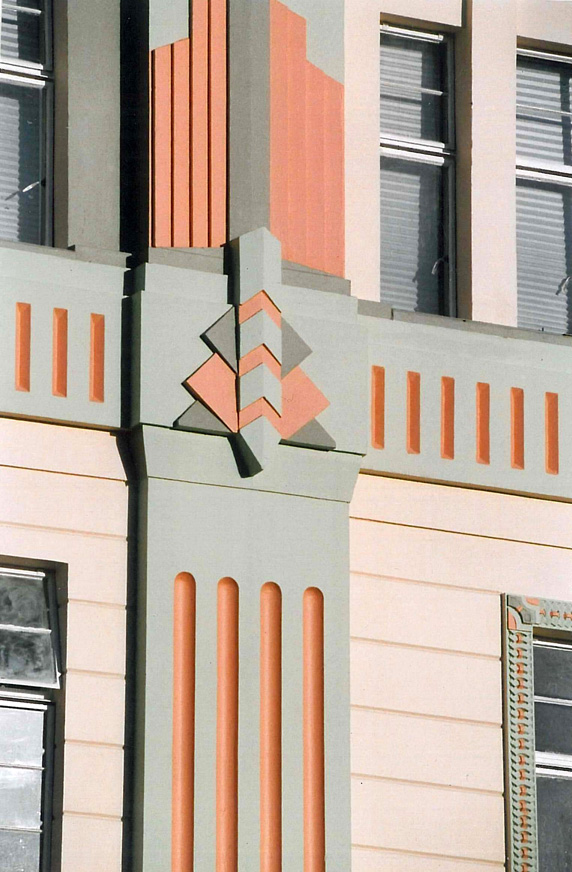
The southernmost region of Portugal is known as the Algarve, and this is where we find the city of Loulé. The Clinica Do Carmo was located at Avenida José da Costa Mealha 94 and had a variety of rectilinear decorative elements on its façade. Sadly, Global Art Deco has been informed that this building no longer exists. We will leave the photos for reference, particularly as it was an attractive example of Portuguese Art Deco.

Clinica do Carmo’s façade.

Surrey Mansions, Durban

South African Art Deco splendour.

We are privileged to have a guest post for this blog from the Durban Art Deco Society. Durban is South Africa’s third largest city and has many Art Deco buildings.

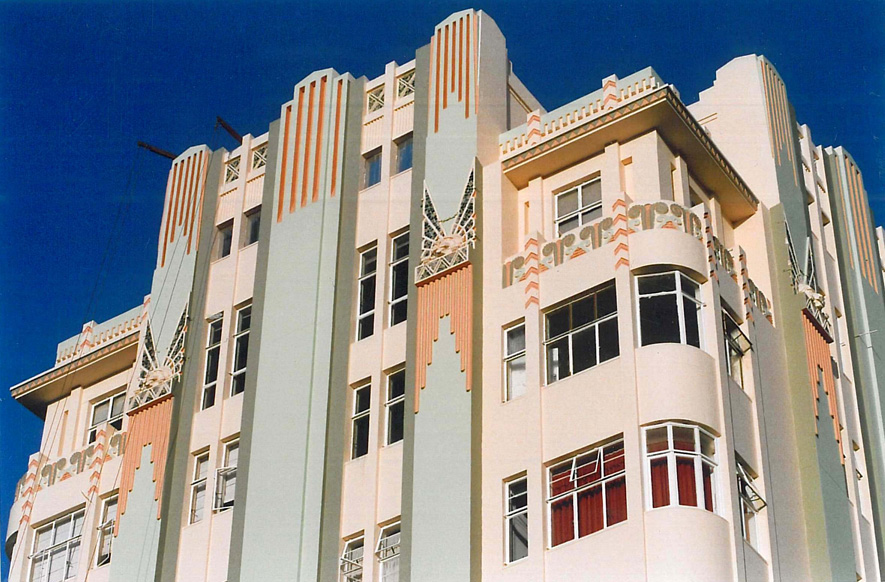
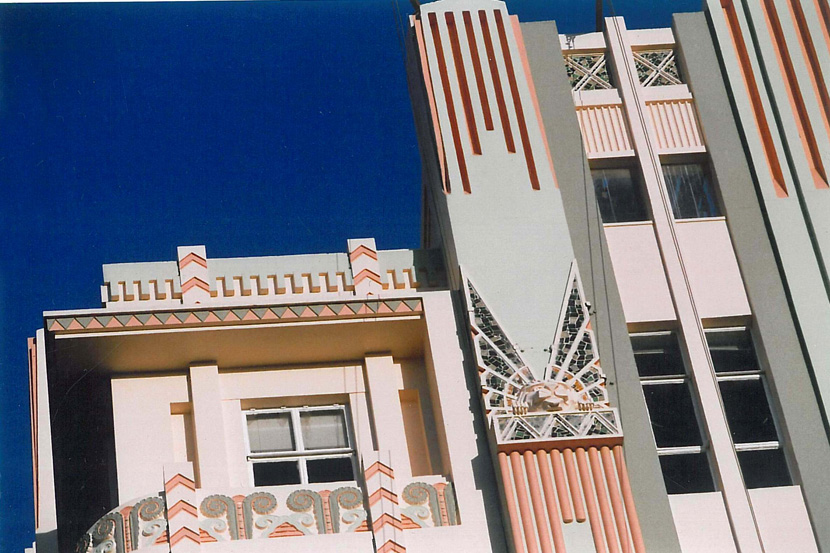
The Surrey Mansions is one of the great Art Deco buildings of Durban. Located at 323 Currie Road, it was designed by W E Langton & W B Barboure, and completed in 1934. It is an eight-storey apartment building with detailing of imagination and sensitivity.  Block like ground and first floors, rounded corners up to a squared off top floor and with fluted giant order pilasters rising up the entire height.  Richly varied stucco reliefs with winged lions high up. Excellent resolution of geometry in the use of rectangular and curved forms.

Photos and text © Durban Art Deco Society

A highly detailed façade.
A detail from Surrey Mansions.

A Barraca, Santos, Lisbon

Once a cinema.

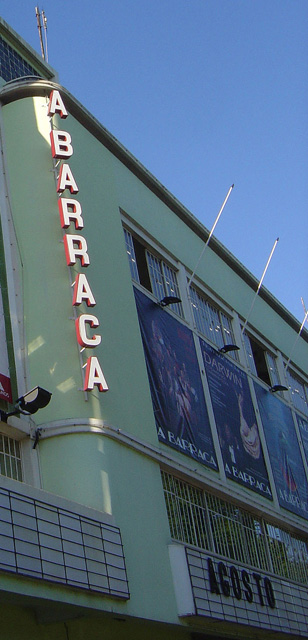
The Cinearte cinema, at 2 Largo de Santos, was constructed in 1938, and features some details which give it an industrial look. Designed by the architect Raul Rodrigues Lima, it ran as a cinema for over four decades, closing in 1981. It was reborn in 1990 as a theatre named ‘A Barraca’ or ‘The Shack’. ‘A Barraca’ has now been successfully bringing a new theatrical dimension to the Santos district for thirty years. Throughout the 1930s and 1940s Raul Rodrigues Lima designed a number of Portuguese cinemas, as well as courts and prisons.

A glass brick tower.

Mansfield Court, Nottingham

The entrance is an axis of symmetry.

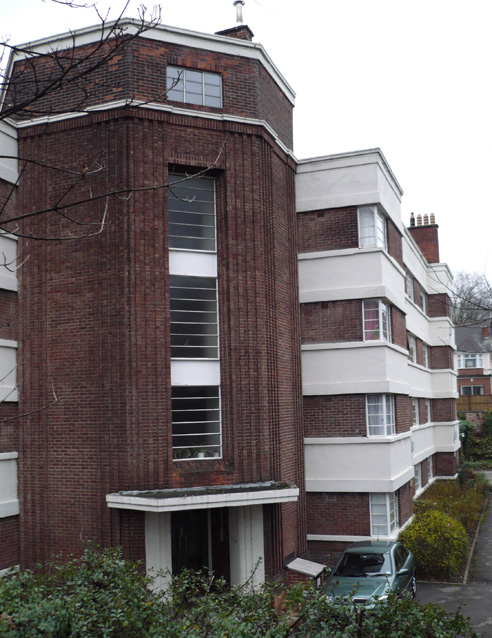
A stylish, 1930s Nottingham apartment block, Mansfield Court’s look of broad, horizontal bars of contrasting brown brick and white render appears to be unique in the city, though there are several similar apartments in London, particularly in the west. You can find it on Mansfield Road in the Sherwood area of Nottingham.

Side view of Mansfield Court.

Hotel Mondego, Coimbra

Note the period typeface used for the name.

Coimbra is Portugal’s university city, and is found a little north of the centre of the country. The Hotel Mondego is situated on the Largo das Ameias in central Coimbra. It has a set of neatly curving balconies and railings on its upper façade.

Igreja de Santa Terezinha, Rio de Janeiro

Façade of Igreja de Santa Terezinha.

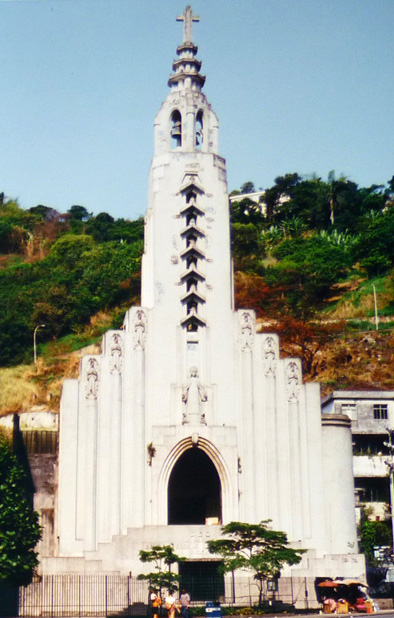
Known locally as the ‘Igreja de Santa Terezinha do menino Jesus’, or ‘Church of Saint Teresa of the boy Jesus’, this church was opened in 1935. It was designed by the architects Arquimedes Memória and Francisque Cuchet who blessed it with a stunning modern bell tower. The painter Carlos Oswaldo provided it with stained glassed windows and mosaiacs. It also has a dynamic location being next to a main road that leads from the edge of the Botafogo neighbourhood and into the tunnel to Copacabana. It became a listed heritage building in 1996.

Detail of Igreja de Santa Terezinha.