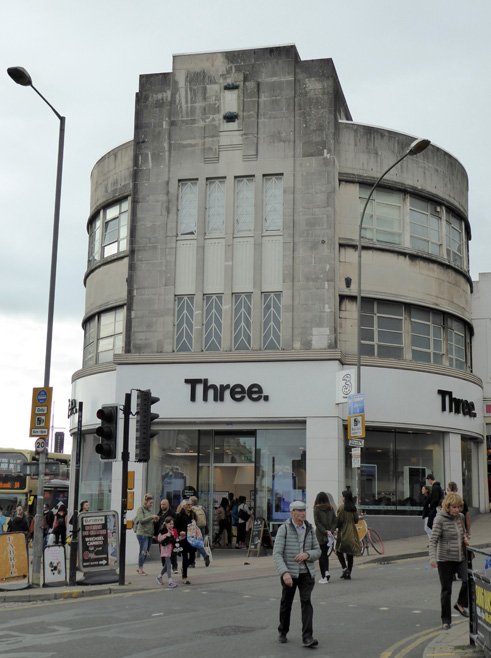
The Imperial Arcade occupies the corner of Dyke and Western Roads in Brighton. The original building dates back to 1923-24 and was designed by Clayton and Black. It was remodelled in 1934 along the lines of streamlined Art Deco by Garrett and Son architects, and has a fine balance of horizontal and vertical elements. The windows of the vertical elements each have eight vertical segments in rows of four. These feature chevron forms dividing the glass.
Here a curving corner is used as a transitionA detail that shows the chevron forms
There are some apartment blocks on the Avenida António Augusto de Aguiar which have excellent Art Deco reliefs over their entrances. These are in the Saldanha district of Lisbon and belong to a group which probably all had the same team of architects.
The supportive family
The first is a building located at Avenida António Augusto de Aguiar 15, which features a corner tower that has a large, carved, stone relief of a family group above the entrance at its base. The mother and father are portrayed giving support on either side of the child.
The lovebirds at #9
Nearby at Avenida António Augusto de Aguiar #9 and #7 are two other related buildings with excellent street level carved, stone reliefs. The one at number #9 features a courting couple of birds, and at #7 a reclining woman lies wreathed with draperies. A date and the sculptor’s name is just visible on the latter at bottom left: 1942, Leopoldo.
The curved end and railings give it a nautical look
Libya’s second largest city, located on the eastern littoral, is Benghazi. After being under Turkish rule for a very long time it was invaded by colonial Italians in 1911. There was consistent resistance to the Italian rulers there until they were pushed out during WW2. As in other North African countries such as Eritrea, Mussolini’s architects introduced contemporary European styles to Benghazi, and there are still some Art Deco buildings there. One nice example is this curvy ten storey apartment block in the centre of the city. It steps in stylishly at the three top floors.
Emblazoned across the top of Charles House at 148 Great Charles Street in Birmingham are the letters ‘CML’ as it once housed the local offices of the Australian company Colonial Mutual Life Assurance. This company was founded in Melbourne, in 1873 by Sir Redmond Barry, who was also a judge there. His chief claim to fame as a judge was passing sentence on Ned Kelly.
Charles House stands at nine storeys in height and has some relief heads and other interesting details around the entrance. Constructed in 1939, the building was designed by the Sydney architectural firm of Hennessy & Hennessy & Co working with London’s Stanley Hall & Easton & Robertson.
This is an interesting eight storey apartment block in central São Paulo. It has a variety of period details and features slot windows and curving balconies. The neighbouring building, visible on the right in the photo below, also has curving balconies, as well as porthole windows.
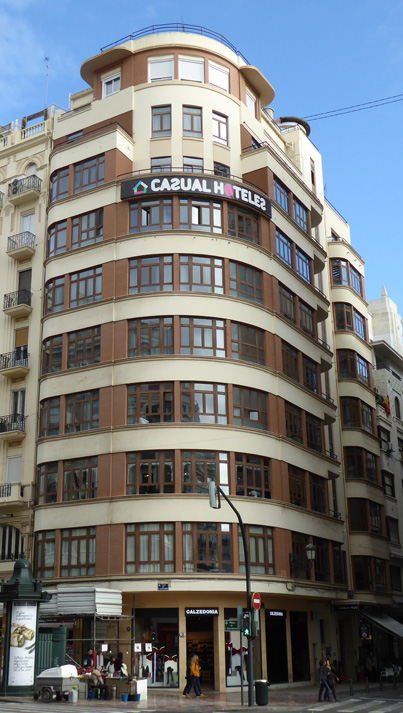
This building sits on a corner lot with its main façade on Calle Barcelonina in the San Francisco area of Valencia. Its original name was the Martí Alegre building and it was designed by the architect Javier Goerlich Lleó. A ten-storey edifice, it was constructed from 1934-1941, and curves around the ground floor, and the six above it, then stepping in with those above. It later enjoyed the name of Hotel Londres for many years before becoming part of the Casual Hoteles group.
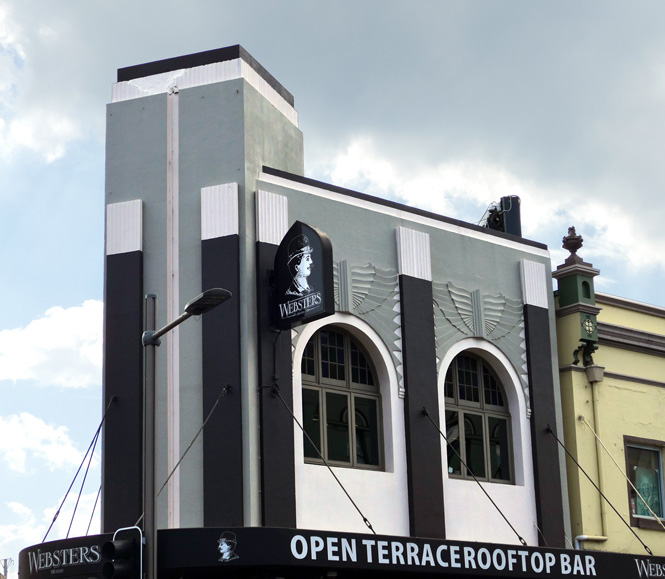
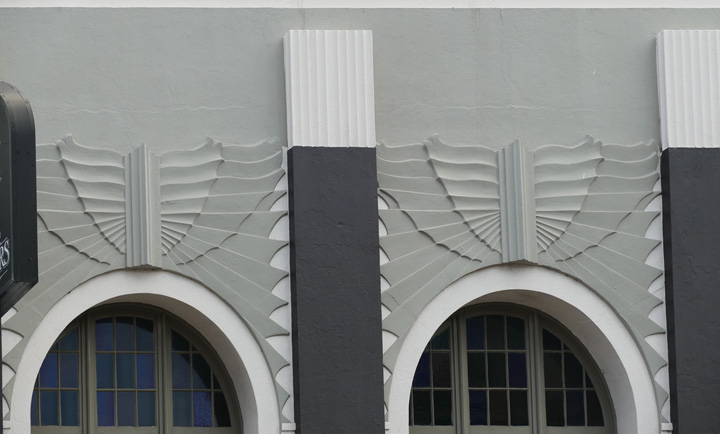
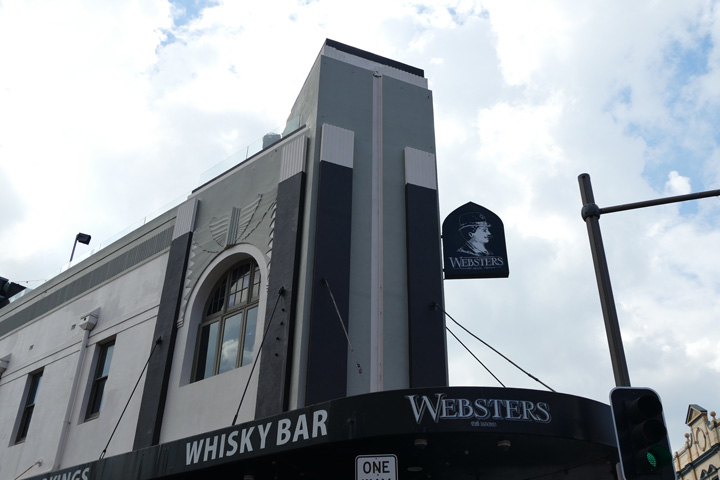
This building is currently the home of Websters Bar, a three storey building on a corner lot at 323 King Street in Newtown, Sydney. Probably constructed in the the 1930s, it features wonderful, winged motifs. There’s a chance that it was a bit more colourful in its original incarnation but the black, white and grey has been skillfully applied here to highlight the decorative features. Thanks again to Keith Barrett for providing these photos.
Global Art Deco is pleased to have another guest post from the Durban Art Deco Society. Durban is South Africa’s third largest city and has many fine Art Deco buildings, including this one.
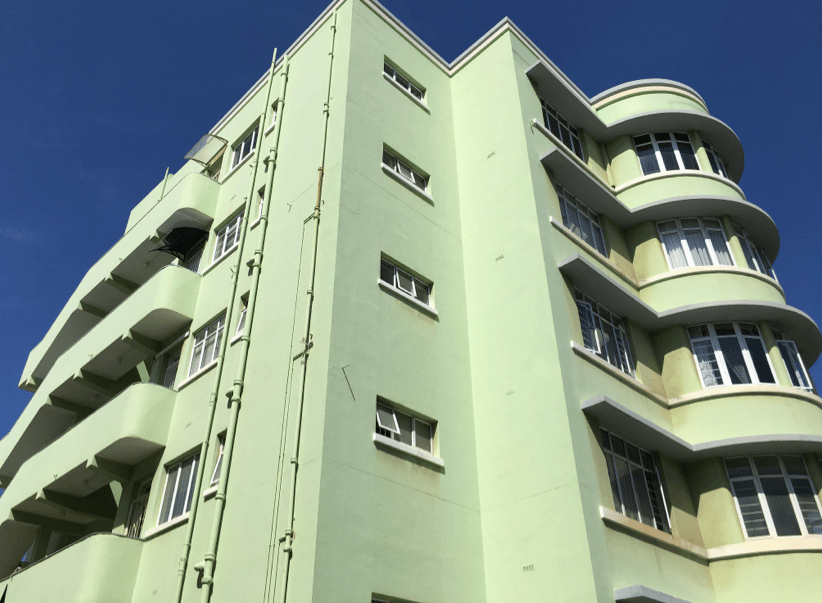
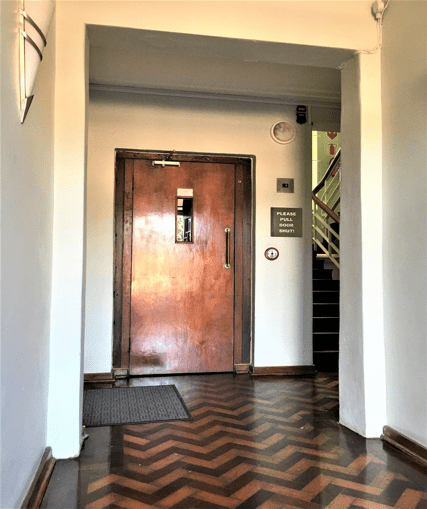
Cheviot Court, Durban This is a striking six-storey apartment building in a prime location on the Berea Ridge, overlooking the city of Durban. Located at 676 Musgrave Road at the corner of Poynton Place, it was designed by architects W S Payne & E O Payne and constructed in 1934. The Streamline Moderne styling is evocative of the fast ocean liners, cars and aeroplanes so admired as the machine age took root in the 1930’s. The building is asymmetric, with large bay windows at right angles at the ends of each floor. A tower rises above the entrance canopy to a decorated flagpole on the skyline. Horizontal lines are created by window sills and eyeshades running the full length of the building on each floor. The entrance canopy is supported on curved-brick pillars, and leads to a simple foyer with zig-zag parquet flooring.
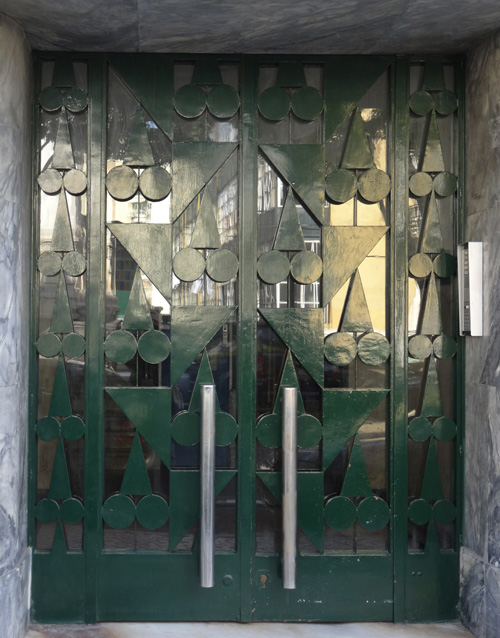
This five-storey apartment block constructed in 1937 has a façade which has a perfect balance of horizontal and vertical elements. Located in central Lisbon, the architect was Cassiano Branco who also designed the Victoria Hotel there. He used shallow, rectangular setbacks emerging from a central axis formed of three continuous bevelled bars rising as a fin from just above the entrance up to the roofline. In contrast to the purely rectilinear façade the entry doors are composed of playful triangles and circles.
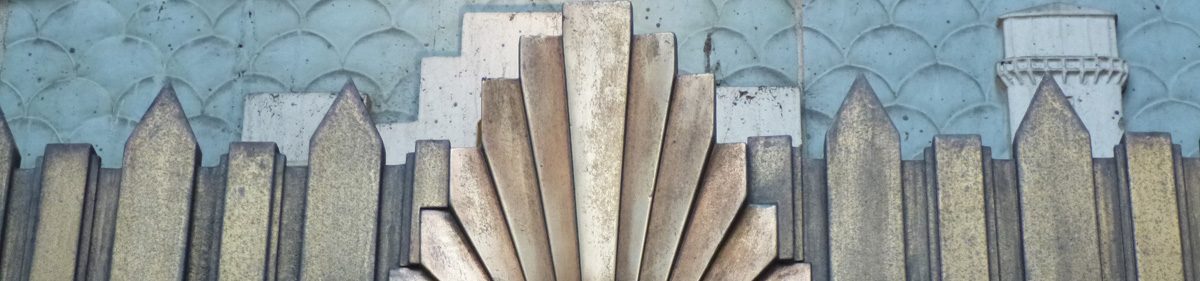
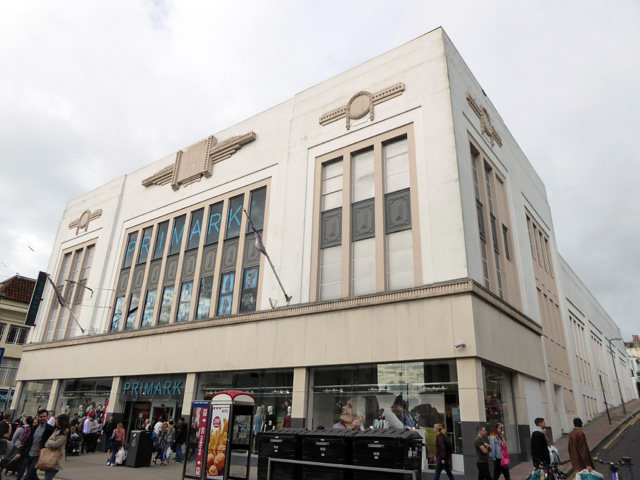
This is a large retail and commercial building currently home to Brighton’s central Primark at 169-174 Western Road. Located not far from seaside Brighton, it had previously been a C&A store and started life as a British Home Store (or BHS) in 1931. It was one of several department stores that appeared on the main shopping streets of the city during the mid-war epoch. It features some wing-like motifs across the top of the façade.






 Global Art Deco