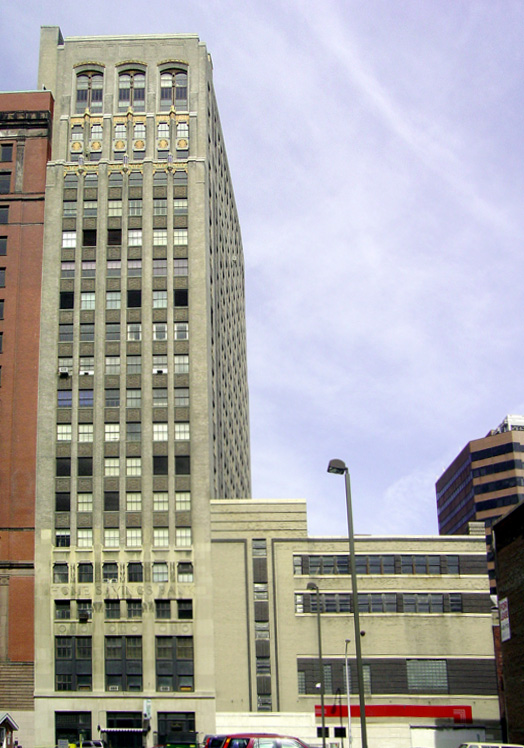
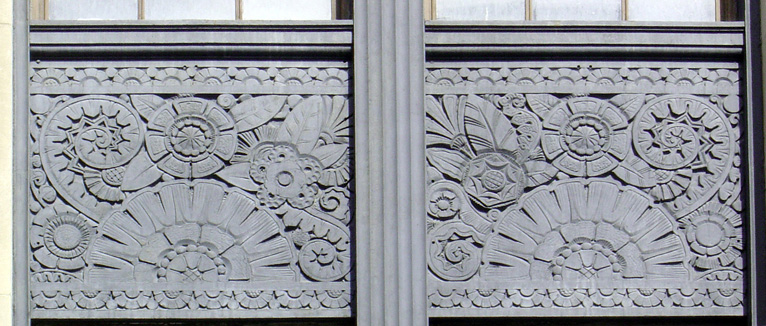
This building in Albany, the state capital of New York, is the 1927 Home Savings Bank. The bank straddles two central city streets and has two entrances: one at 11 North Pearl and the other at 6-8 James Street. Both façades possess fine Art Deco details, with the bases of them featuring carved stone reliefs of floral spirals. This 22 storey edifice came from the architectural firm of Dennison & Hirons who created stylish, metal Art Deco gates for the 11 North Pearl entrance. These were set in a tall metal frame with cameos in octagons running up it on either side.
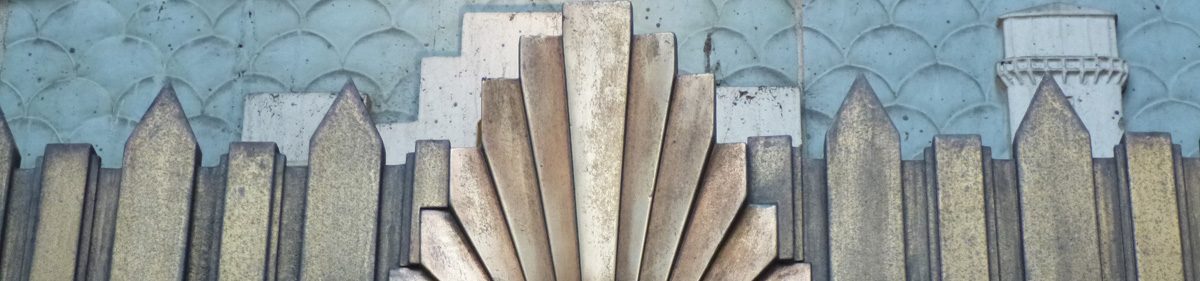
Explorer cameoArt Deco detailsFrench style floral panelsMetal grate with squirrel motif
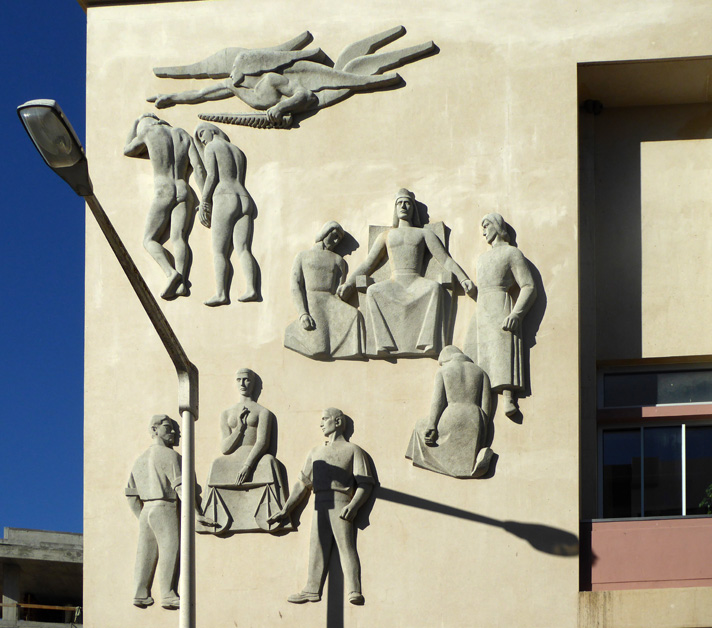
This is the Tribunal Judicial da Comarca de Faro – Secção Central, or the County Courthouse of Faro, Central Section. It is located at Avenida 5 de Outubro 10, in Faro, the capital of the Algarve region at the south of Portugal. The sculptures show a sequence from divine justice, with Adam and Eve expelled from the Garden of Eden, then a King dispensing justice from his court, to modern law with a claimant and a respondent in front of the symbol of justice.
We are pleased to have another guest post for this blog from the Durban Art Deco Society. Durban is South Africa’s third largest city and has many Art Deco buildings.
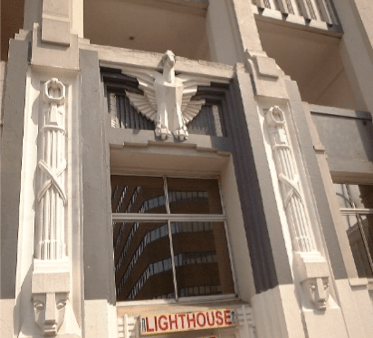
Enterprise Building, Durban This eight-storey, 1931 apartment building, designed by A A Ritchie McKinley, has a classic Art Deco design. It is located at 47 Samora Machel (Aliwal) Street. The distinctive elevational treatment is in the form of a rich range of stylised geometric animal and abstract figures. Griffons and zig-zag forms at high level with Mayan type heads and a superb eagle form over the entrance. The “fasces” motifs (bundle of rods, often tied, with an axe as an emblem of power, which were carried by lictors, ancient Roman officials, before the superior magistrates) might indicate sympathy with the advent of Mussolini on the part of the architect or client.
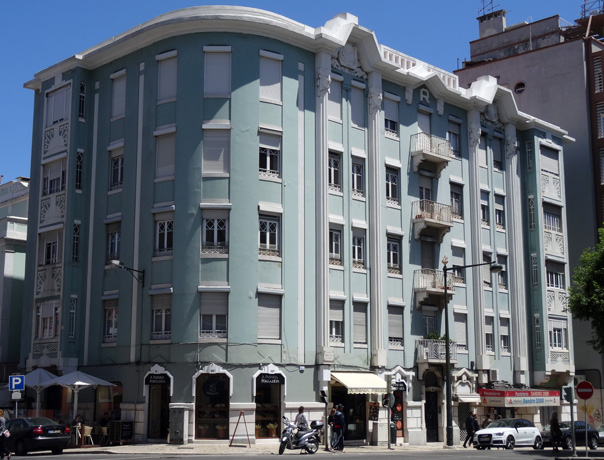
Avenida António Augusto de Aguiar 100 curves round the corner.
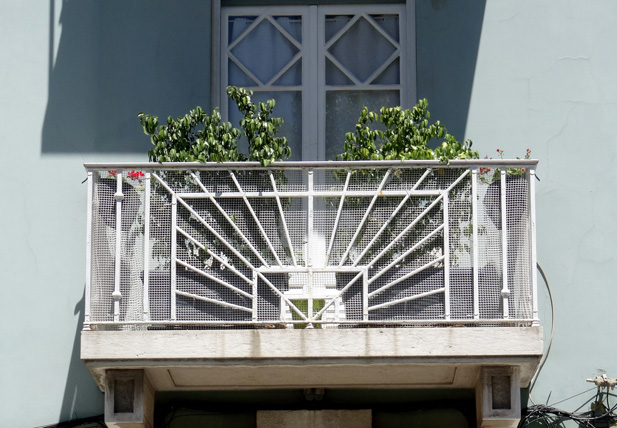
A striking building in Lisbon’s Saldanha district, this five-storey mix of retail and residential sits on the corner of the major artery that is Avenida António Augusto de Aguiar and the Rua Augusto dos Santos. Among the Art Deco details featured on it, highlighted in white against the prevailing green, are three different geometric sunbursts, one in wrought iron on a balcony and the other two below windows.
A metal sunburst.Two similar sunbursts.A metal window grate.
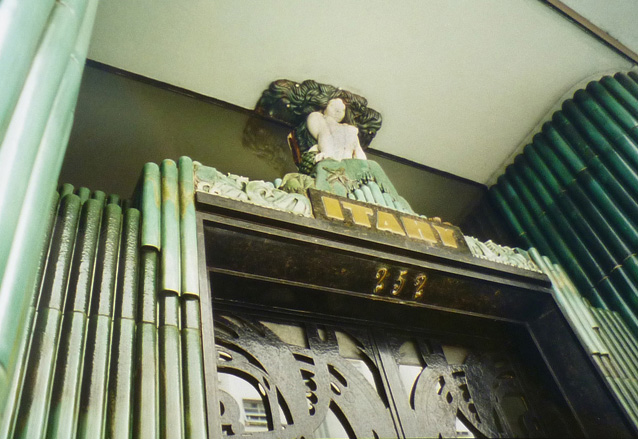
If you ever decide to visit Rio de Janeiro you will have to visit Copacabana beach, and maybe you will stay in the area. If this should happen you will inevitably encounter the Avenida Nossa Senhora de Copacabana as it is one of the most important thoroughfares in the area. Check out the building at number 252 which is called Edifício Itahy, constructed in 1932. It was designed by São Paulo born architect Arnaldo Gladosch, and the spectacular entrance watched over by the dark haired mermaid you see here was created in 1935 by Luiz Correia de Araújo.
Up in the north of Portugal you can find the beautiful city of Porto. Here is an apartment block in the city located at Rua de Sá da Bandeira 630. Below it at street level are shops and the Garagem de Sá da Bandeira, a car park, whose sign is on the far right. The building is well proportioned, if a little boxy. The only curved elements are the corbels at the base of the two continuous vertical windows used for the stairwells.
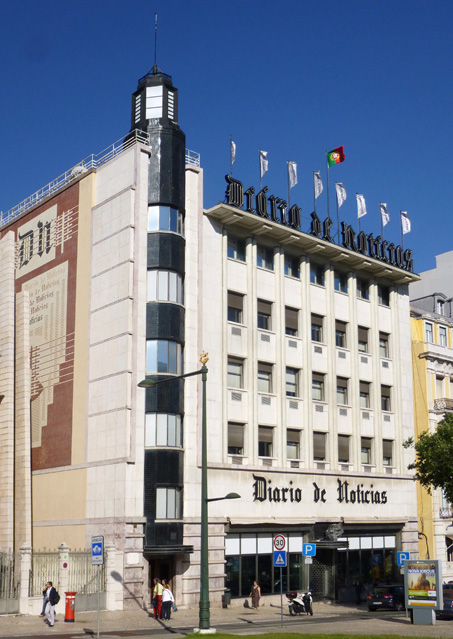
The daily newspaper Diario de Noticias has been published in Lisbon since 1864. This mid-twentieth century building, designed by the architect Porfirio Pardal Monteiro, won the Portuguese ‘Premio Valmor’ architectural prize in 1940. Located on the prestigious Avenida da Liberdade in the Rossio district, it united in one location all of the various functions of the newspaper, from editorial all the way to subscriptions, printing and distribution. It was listed as a National Monument in 1986. Note the embedded black tower on the left, complete with a lantern at the top, together suggesting a lighthouse. Recently it has been converted into luxury apartments.
The Edificio López Serrano Apartments in Havana, Cuba.
We are fortunate to have a guest post from author and travel blogger Will Linsdell. He has published several books about rail travel and other subjects which you can see on the Hornbill Publishing website (https://hornbillpublishing.co.uk/). Will is the creator of the Wilbur’s Travels blog: (https://wilburstravels.com/) which can take you almost anywhere in the seventy countries he has visited thus far. Among these is Havana, Cuba where his post comes from.
I have always appreciated an aesthetically pleasing building and my appreciation of Art Deco was heightened when I visited Miami in the early 2000s.
Although I don’t exactly go out of my way to spot certain buildings, if they happen to be located where I find myself I will go out of my way to photograph them.
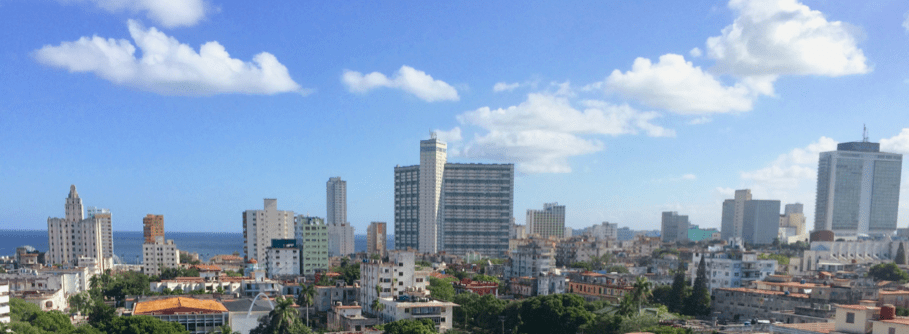
Havana has some fine examples of neoclassical buildings and besides this has a few Art Deco jewels, including the López Serrano building.
The construction of the building was promoted by José Antonio López Serrano, a publisher who ran La Moderna Poesía, once Cuba’s most famous bookstore which stood for over a hundred years but sadly is a building no longer in use and fading fast.
See the Tripadvisor page about La Moderna Poesía here.
The López Serrano building was designed by the architect Ricardo Mira in 1929 (in 1941 he also designed La Moderna Poesia bookstore), and was constructed in 1932 when it became the tallest residential building in Cuba.
Centrally located above the ten stories of the main building sits a tower of four apartments that are supported by ten steel columns.
I took the photo that you see below from our high-rise hotel with fabulous views of the city stretch of Caribbean Ocean known as the Malecon.
An Art Deco tower by the beach.
Whilst the building (like much of Havana’s fine period architecture) is looking slightly worn, it is still a fabulous sight and worthy of any skyline.
The Havana skyline with the Edificio López Serrano far left
One interesting if not entirely pleasant fact about the building regards congressman, senator, political activist, government critic and presidential candidate Eduardo Chibás.
Eduardo was living on the fourteenth floor penthouse at the time that he committed suicide by shooting himself in August 1951, just after finishing his political broadcast on CMQ Radio and a day after his 44th birthday.
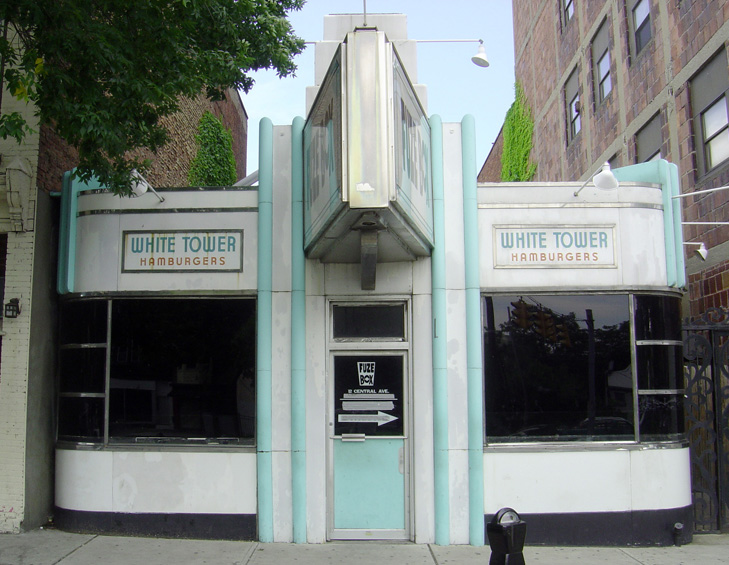
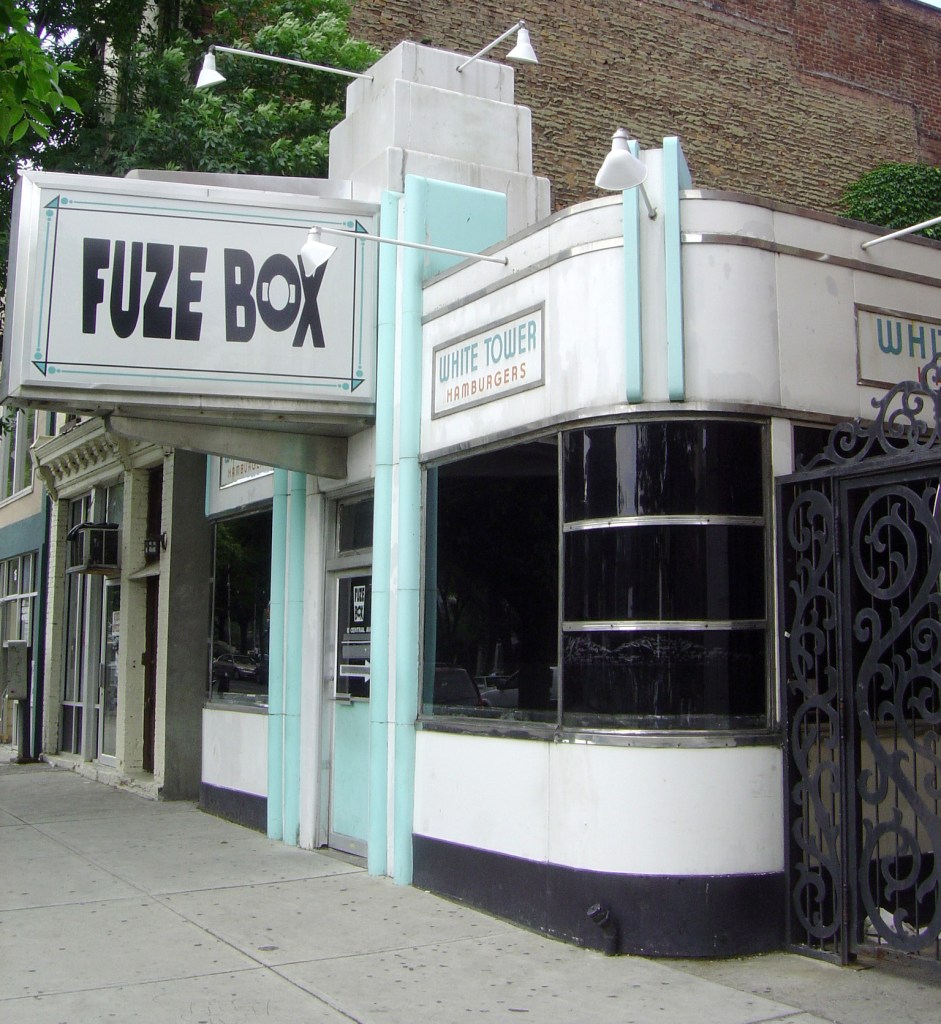
Formerly part of the nationwide White Tower Hamburger chain founded in 1926, this one in the city of Albany, the state capital of New York, had been a dance hall and nightclub from the 1980s. Since the 1990s it had been called the Fuze Box and was home to Punk and Hard Rock. Located on Central Avenue, it is a compact mix of streamline and skyscraper looks. Well proportioned and well coloured, with chrome strips for detail, it closed in March 2020 because of the pandemic and its owners put it up for sale in August 2020.
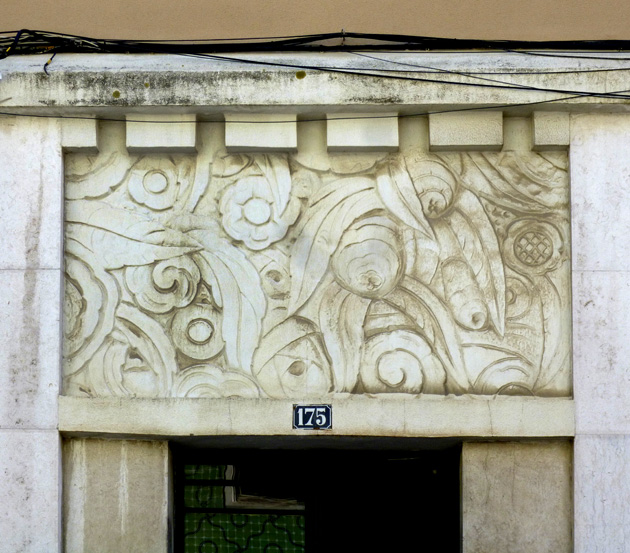
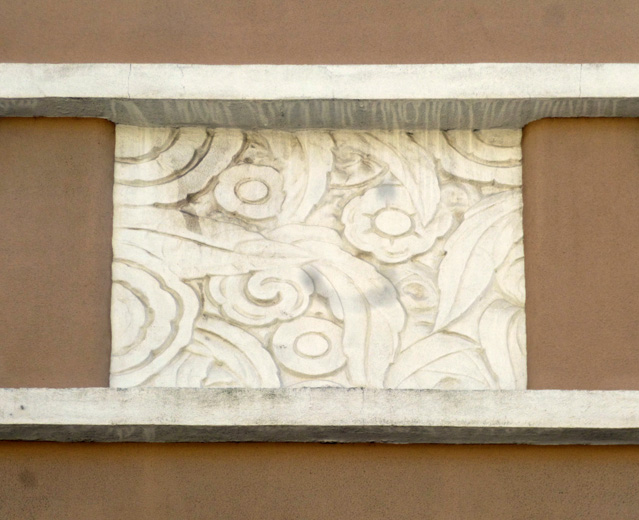
Here is a six storey apartment block located at Rua do Salitre 175 in the Rato district of central Lisbon. Its key colours are brown and white, and it has angular bay window towers rising from the third to fifth floors. Another feature is the carved, stone relief panels of flower arrangements which give a nod to the French designers who evolved them. These can be seen above the central entrance then between the windows on the floors above.
Flower arrangement above the main entrance.More carved flowers and leaves.













 Global Art Deco