Rua Abade Faria 52, Lisbon

A modest stack of pleasing curves

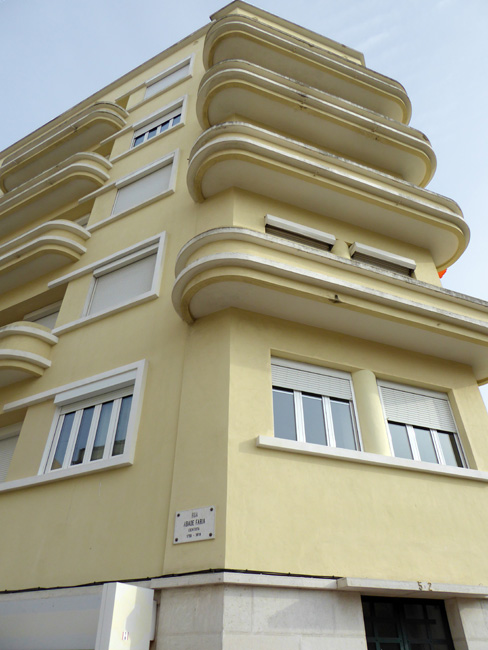
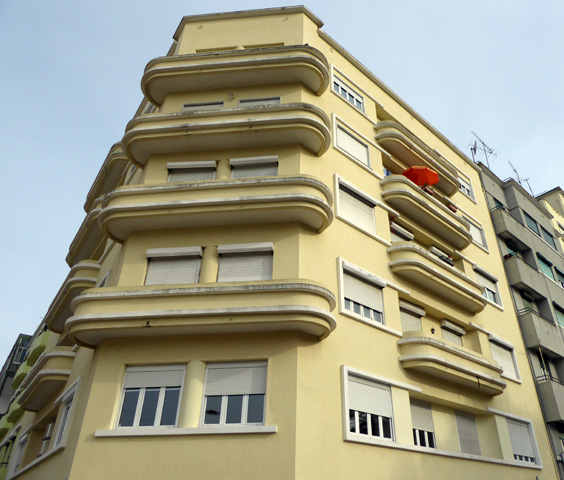
We could certainly label this Lisbon apartment building as being Streamline Moderne with its racy, curving balconies. The street it is located on is named after a fascinating character known as Abade Faria, or Abbot Faria, born in 1756 in the Portuguese Indian colony of Goa as José Custódio de Faria. Aside from being a man of the cloth he was a revolutionary, and also one of the first to study hypnotism.

The building stands on a corner lot

Apartments (2), São Paulo

The pink place on the corner

Here are two Art Deco apartment blocks found in the older part of the city of São Paulo, Brazil. First, the pink one features continuous curving balconies and some nice fenestration to the right with coloured glass and porthole windows. The white building below is in Japantown in the Liberdade district, situated on Rua Galvão Bueno. It has curvy corners and balconies, and steps in gradually at the top.

Mixed commercial and residential

Devonshire Court, Durban

A ten-storey Art Deco tower

Global Art Deco is pleased to have another excellent guest post from the Durban Art Deco Society. Durban is South Africa’s third largest city and has many fine Art Deco buildings.

Devonshire Court is located on the former Victoria Embankment, now known as Margaret Mncadi Avenue. It received a fresh coat of paint over the last year and now has a bright green and yellow colour scheme suitable for an Art Deco apartment tower. Constructed in 1938, the building was designed by William Barboure, who also helped design the 1934 Surrey Mansions together with WE Langton. One unique feature of Devonshire Court is a tunnel for motor vehicles under the south side of the building, which leads through to Devonshire Place. In the tunnel and at the rear of the building is a motor vehicle service workshop.  The workshop is no longer in operation but the signage “Carburettors” and “Servicing” is still painted on the pillars of the tunnel. The entrance to the building is original, complete with terrazzo flooring.

Photos and text © Durban Art Deco Society

Detail of the top of Devonshire Court
A curved component hidden at the back
Chevron forms at the sides of the main entrance
The tunnel for motor vehicles
Another view of the main façade

Bank Hotel, Sydney

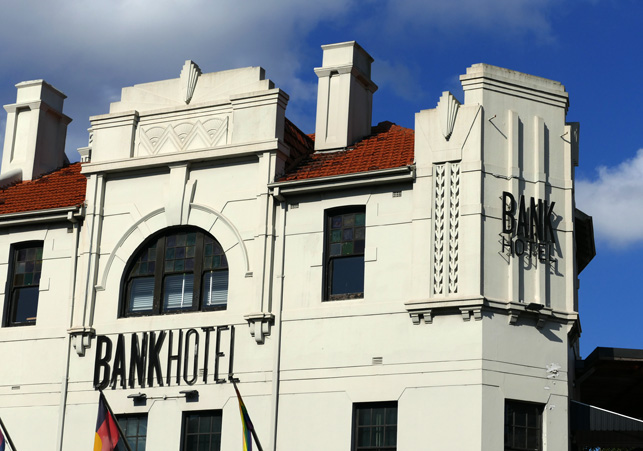
The façade of the Bank Hotel

The Bank Hotel in Sydney can be found at 324 King Street in Newtown, a short walk from the Newtown train station. Currently found solely in beige, it nonetheless features some fine Art Deco detailing on its upper façade, in particular the upper centre zig-zag row of chevrons linked by curves and pleating. Inside there are four different bars to drink in. Thanks again to Keith Barrett for the photos.

Carved masonry with chevrons and other Art Deco details
A view of the upper right hand side

Blunts Shoes, Leicester

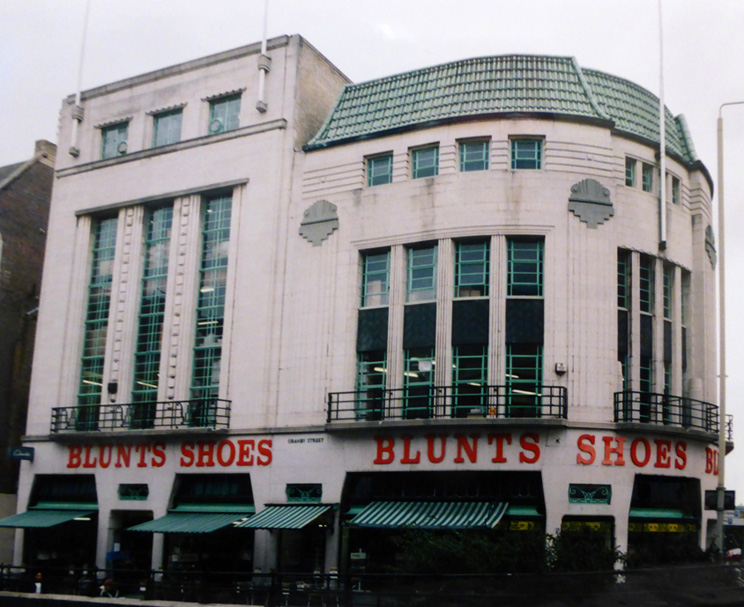
Green trim and grey stone

The city of Leicester, in the English midlands, is home to Blunts Shoes located on the corner at 128-132 Granby Street. The building was originally constructed in 1933 for the business of Nathan Harris Furnishings and features many fine Art Deco details. It was designed by the architects Symington, Prince and Pike who clad it in Portland limestone and covered it with a stylish pantile roof. The extra part on the left is a carefully blended extension from the early 1960s.

The other side of the corner
A close-up of the metal window grate
Another delightful detail of the Blunts Shoes building

Eden Teatro, Lisbon

Possibly Lisbon’s most impressive Art Deco façade

The Eden Teatro, or Eden Theatre, sits on the Praça dos Restauradores in central Lisbon, and is one of Lisbon’s most spectacular cinema buildings, showing films up until 1989. Cassiano Branco and Carlo Florencio Dias were the architects responsible for this Art Deco palace, which opened in 1931. The building features a magnificent, creamy pink coloured marble façade and a floating stone frieze across the top. There is also an abundance of geometric fenestration throughout. The interior was altered when it was converted into an apart-hotel complex in 2001.

Take note of the masks mascarading as capitals
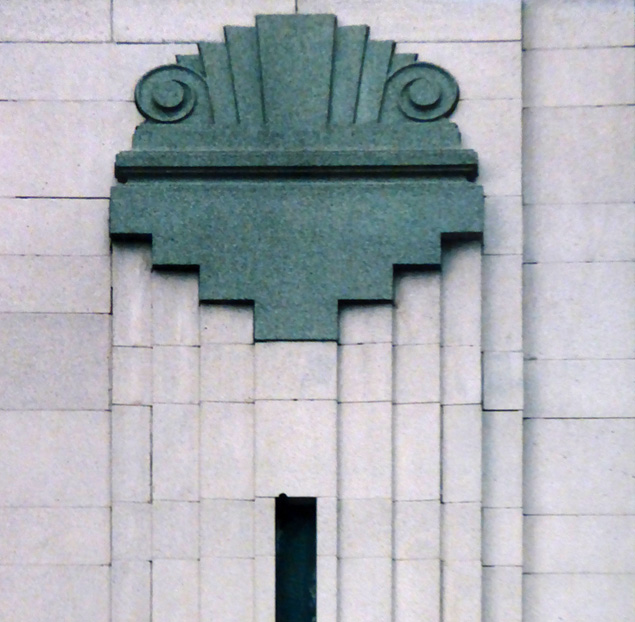
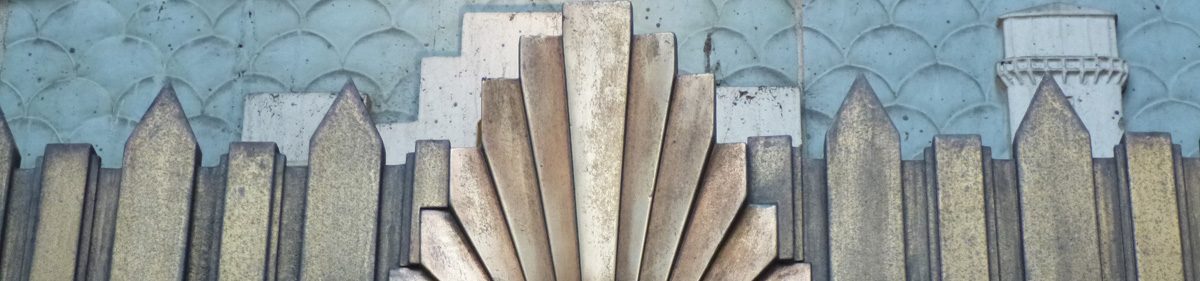
Some details of the carved frieze

Rua Pedro Álvares Cabral, Alvor

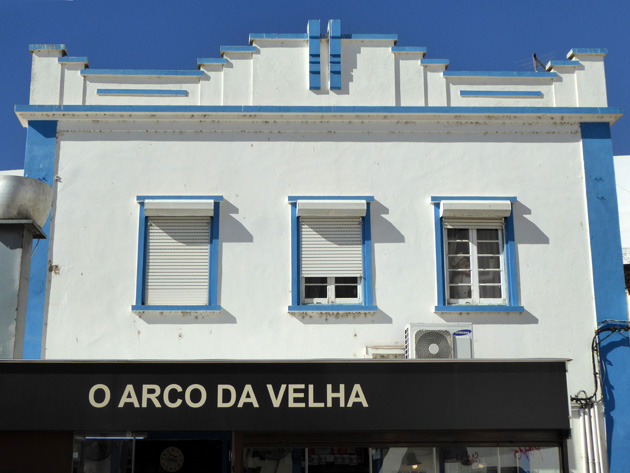
The parapet is modest gem

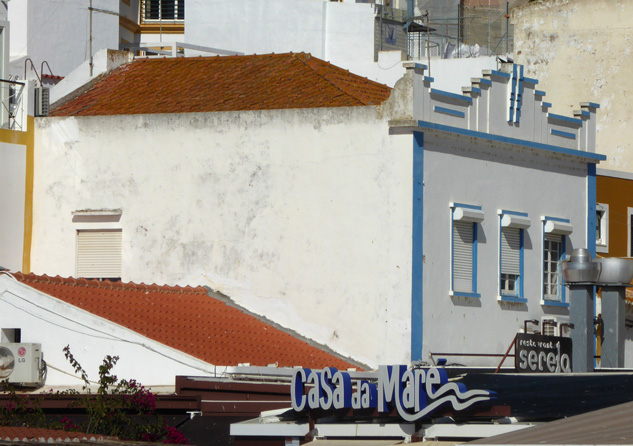
This is a small, two storey building in the Portuguese seaside town of Alvor. Alas, only the upper floor maintains the original Art Deco form, in particular the parapet which comes replete with steps, massings and horizontal bars tricked out in blue. Pedro Álvares Cabral was a Portuguese nobleman, military commander, navigator and explorer regarded as the European discoverer of Brazil.

A traditional, orange, ceramic roof sits behind the parapet

Government buildings, Venice

A distinctive curving bay window

Located on Venice’s island known as the Lido, these two buildings both appear to be local or regional government offices. Both have beige façades with brown trim and curves incorporated into their designs, as well as strong metal grilles over all of the windows.

This one curves around a corner

Tejidos Marina, Valencia

A tall corner tower in maroon

A ten-storey curving corner building capped on the curve with a lantern, its lower floors are used for commercial purposes with apartments above. The ground floor is taken up by the fabric retailer Tejidos Marina, founded in 1953, some years after this building was constructed. It is located in the centre of Valencia at Avenida del Oeste 27 (originally known as Avenida Barón de Cárcer) at the corner of Calle de Adresadors.

House, Rio de Janeiro

Note the unique metal gate

Though apparently a monochrome grey, this house in central Rio de Janeiro was originally white and simply needs the grime cleaned off of it. It is a singular creation, with details such as zig-zag glazing up the sides of the windows, and a one of the reliefs set in an octagonal cartouche.