A modest, Art Deco bungalow in the seaside city of Albufeira, in the Algarve region of southern Portugal. There is a date at the top centre of the building of 8 October, 1953, and below this a series of diagonals making what could be either a zigzag or a pair of mountain peaks. Underneath all of this is a five-pointed star.
Located at Paseo de la Alameda 15 at the corner of Calle de Don Armando Palacio Valdés, in central Valencia, this curved corner building is a mixture of commercial and residential. The Alameda Beers restaurant occupies the ground floor.
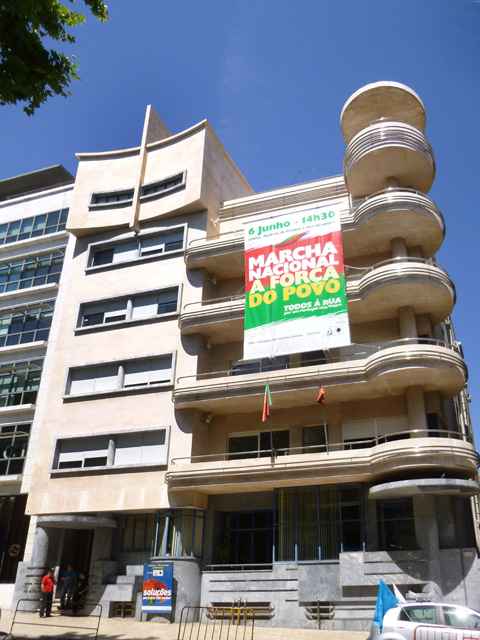
The Victoria Hotel was designed by the tremendously talented architect Cassiano Viriato Branco, who also designed other landmark, mid-war buildings in Lisbon such as the Teatro Éden. Work began in 1934 on the project and it was completed in 1936, though this was only part of the architect’s concept.
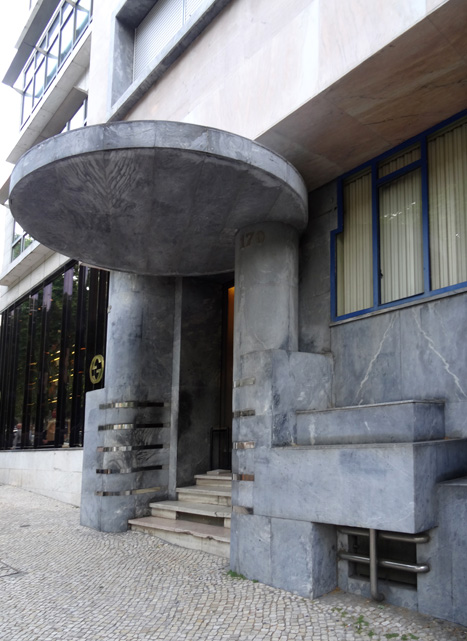
The building had a number of features, including a facing of pink marble, but the most eye-catching one was certainly the circular balconies stacked along the corner of the six-storey building. These were cleverly echoed with a round porch projecting out above the entrance.
By the mid 1970s the hotel had become run down and neglected which engendered an attempt to revive it. Nothing came of this in the end and the building was bought in 1985 by the Lisbon branch of the Portuguese Communist Party, and it remains their regional headquarters.
Many great collections of historical art are housed in Neo-Classical buildings. Up in the midlands of England there is, however, one great collection that is housed in a purpose-built Art Deco art gallery. This is The Barber Institute in Birmingham, which was founded by Henry Barber, a successful property developer, with assistance from his heiress wife, Lady Barber. Mr Barber died in 1927 and the collection and the gallery were created by Lady Barber as a fitting and permanent memorial to her husband.
Lady Barber herself passed away in 1933, but by this time she had founded the Barber Institute of Fine Arts. This was bequeathed to the University of Birmingham, and its trustees worked assiduously to bring it into existence. The architect was Robert Atkinson and the completed Institute opened in 1939, complete with galleries and a concert hall. The exterior has a mixture of Art Deco curving and traditional angular corners, and is stone-faced on the lower floors and brick-faced above. There are some stone reliefs on the exterior.
Stone relief on the upper façadeThe entrance to the Barber Institute
Sitting just opposite Lisbon’s expansive Parque Eduardo VII (Edward VII Park, named in honour of the UK monarch who visited Portugal in 1903), the building at Avenida Sidonio Pais 18 is one of a cluster of contiguous structures which probably all had the same team of architects. These are most likely buildings from the 1940s and nearly all of them have at least a sculpture over the main entrance.
Avenida Sidonio Pais 18 is a modern building with a Classical touch not only in the window pediments on the exterior but also in its ambitious sculpture programme. On either side of the front entrance are vertical groups of four carved, stone reliefs. These depict in fine Art Deco style eight of the nine Muses, those Classical personifications of the arts and knowledge including Clio, the Muse of history and Euterpe, the Muse of flutes and lyric poetry.
Stone reliefs of the Muses by the front entranceClio, the Muse of historyEuterpe, the Muse of flutes and lyric poetry
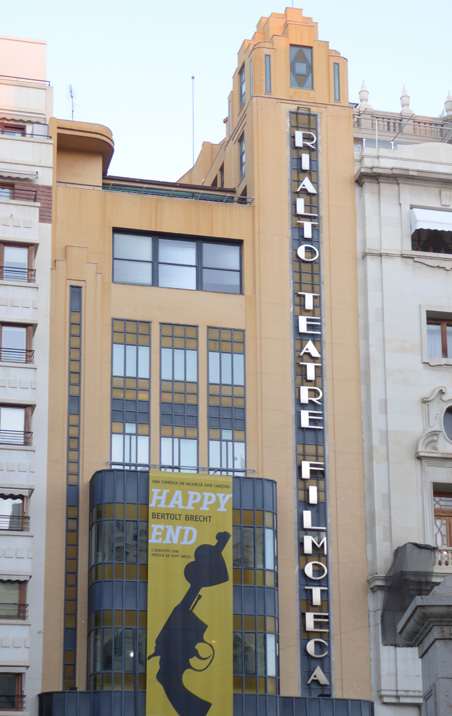
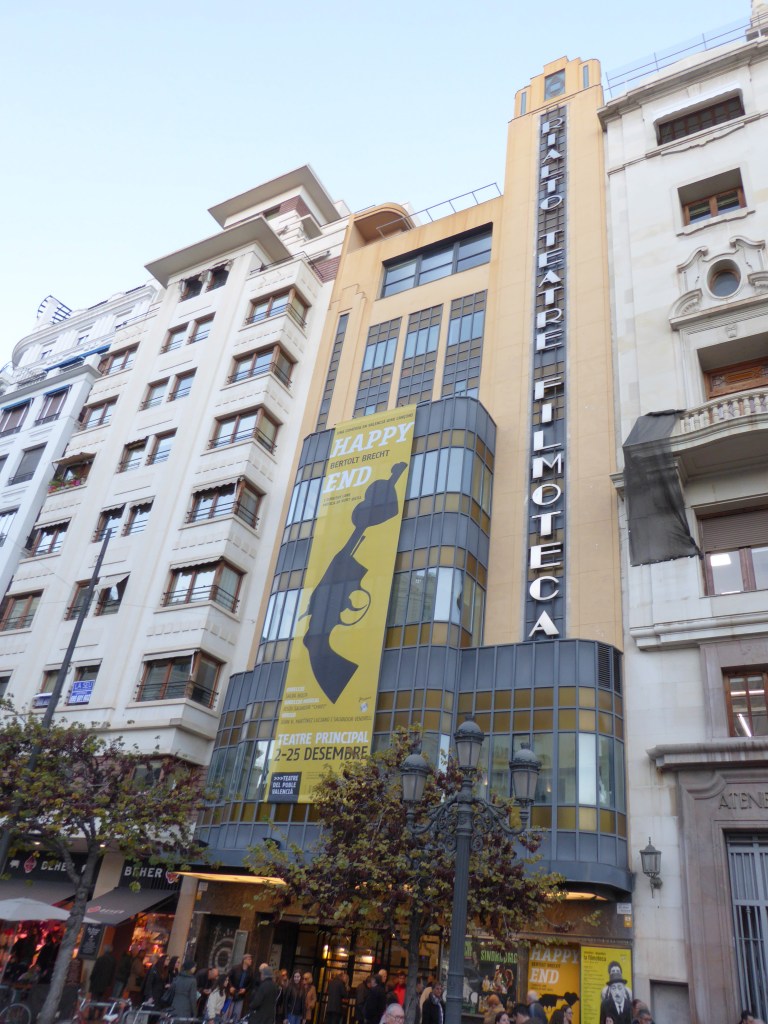
If you should visit the Spanish seaside town of Valencia you might discover the marvellous Teatro Rialto there. Located in Plaza del Ayuntamiento (Town Hall square) in the central city area, it was designed by the architect Cayetano Borso di Carminati and constructed in 1939. Originally a cinema, it was taken over by the Valencian government who converted it into a theatre in the 1980s. It also has a screening hall for the local government’s film library. The Teatro Rialto makes an interesting comparison with the Kaaitheater in Brussels: https://globalartdeco.com/art-deco-cities/brussels-2/
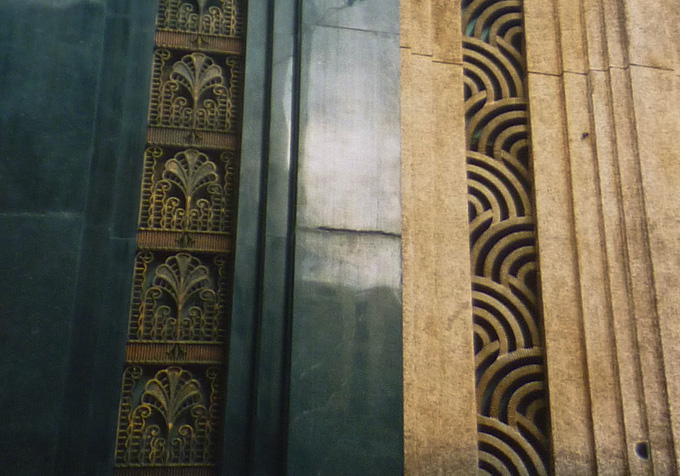
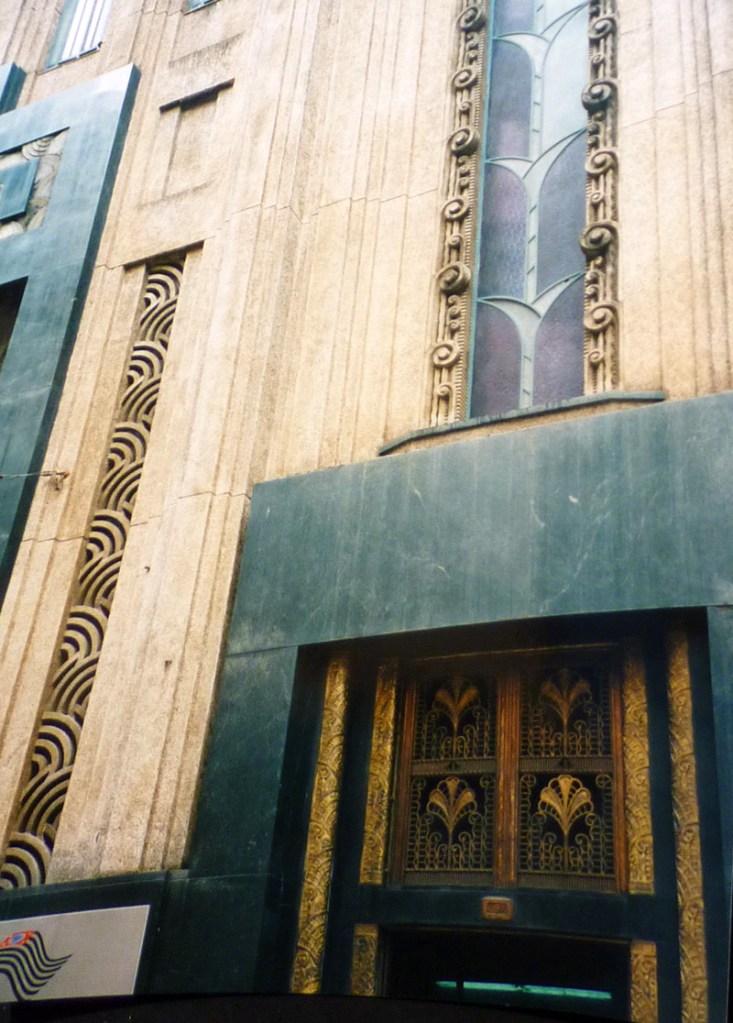
The building where the Department of Tourism of the State of São Paulo (Secretaria de Turismo do Estado de São Paulo) now resides was originally constructed for the 1938 Banco de São Paulo. Located at Praça Antonio Prado 9, it was designed by the architect Álvaro de Arruda Botelho. This building is composed of two interconnected wings, one twelve storeys high and the other sixteen. The façade is extensively decorated with Art Deco designs created from materials such as granite, marble, and bronze.
A metal window grill with plant formsA variety of Art Deco motifsAnother view of the lower façade
We are fortunate to have another guest post from the Durban Art Deco Society. Durban is South Africa’s third largest city and has many fine Art Deco buildings, including this one.
Berea Court
This is a multi-storey 41-apartment building with excellent detailing, designed for the Langton family by Alfred Arthur Ritchie McKinlay around 1930 and located at 399 Berea Road. The stucco finish has good mouldings in authentic Art Deco style. A stylised theme of wings is evident in the design, with geometric string courses. The central balcony at high level is richly decorated with a sunburst pattern and forms a high level focus to Berea Road.
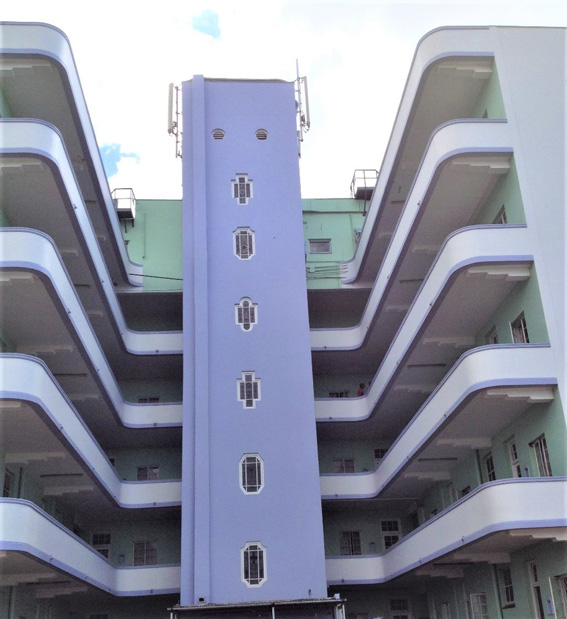
Fluted pilasters rise through the façade to a crenellated parapet with lion features. The entrance below has an African feel to the surround mouldings. There is a well-designed rear elevation with cantilevered walkways and an amusing range of stained glass windows to the lift shaft, and flat entrances, which have original milk-bottle alcoves. The top floor is open for water tanks and the lift shaft.
The building is used for student accommodation and is well maintained by the owner.
The superb, African styling of the main entranceAn original stained glass window at Berea CourtStreamlined balconies at the backA detail of the top of Berea Court
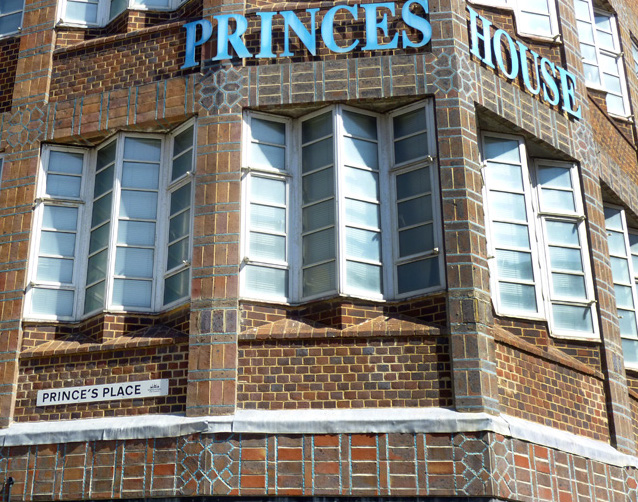
Brighton-born architect Harry Stuart Goodhart-Rendel designed Princes House in 1935, though it was originally the home of the Brighton & Sussex Building Society. Located at 166–169 North Street, this brick faced, steel-framed building was constructed in 1936 and features such unique Goodhart-Rendel details as pleated fenestration and superb brickwork. It became a Grade II building in 1994.
A truly eclectic architect, Harry Stuart Goodhart-Rendel, was an architectural prodigy, who had an early design constructed when he was only 16 years old. An accomplished composer and pianist, he studied music at Cambridge, and, during this time, designed an important office that was built in Calcutta. Architecture won out over music, and he set up his own practice in 1909. One of his best known buildings is Hays Wharf/St Olaf House, on the Thames in London. This was constructed 1928-32, just a few years before Princes House. A property developer purchased the Brighton building in 2002 and had the upper storeys converted into 34 apartments.
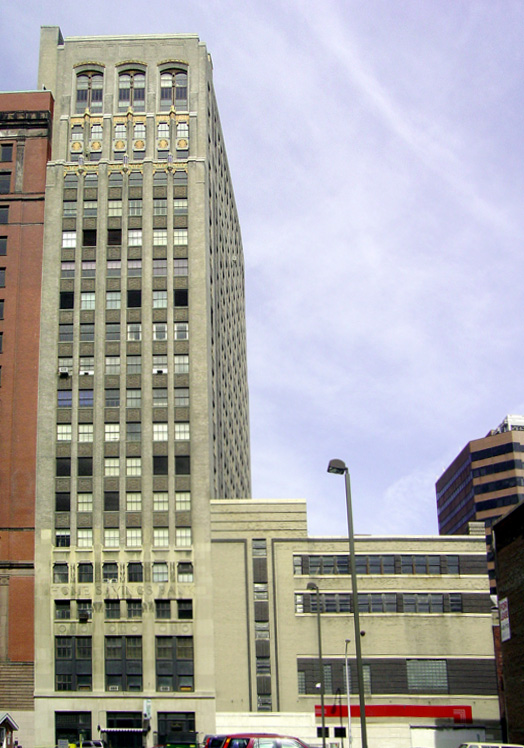
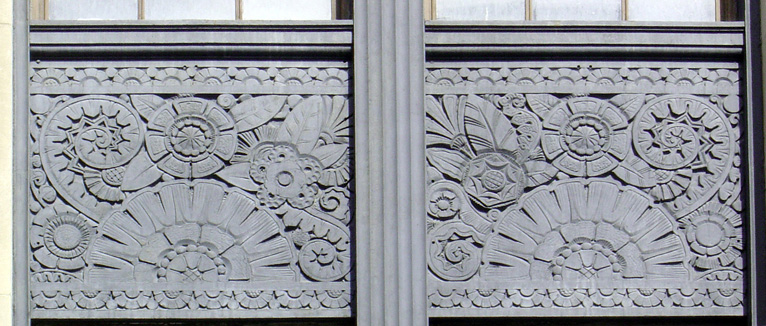
This building in Albany, the state capital of New York, is the 1927 Home Savings Bank. The bank straddles two central city streets and has two entrances: one at 11 North Pearl and the other at 6-8 James Street. Both façades possess fine Art Deco details, with the bases of them featuring carved stone reliefs of floral spirals. This 22 storey edifice came from the architectural firm of Dennison & Hirons who created stylish, metal Art Deco gates for the 11 North Pearl entrance. These were set in a tall metal frame with cameos in octagons running up it on either side.
Explorer cameoArt Deco detailsFrench style floral panelsMetal grate with squirrel motif













 Global Art Deco