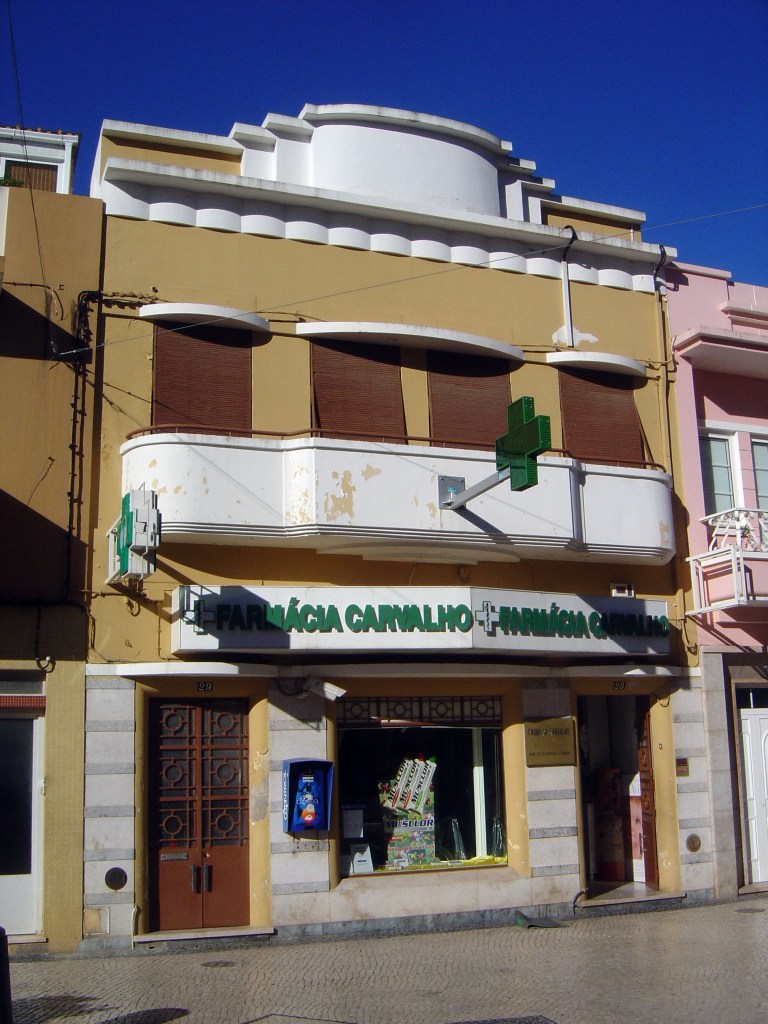
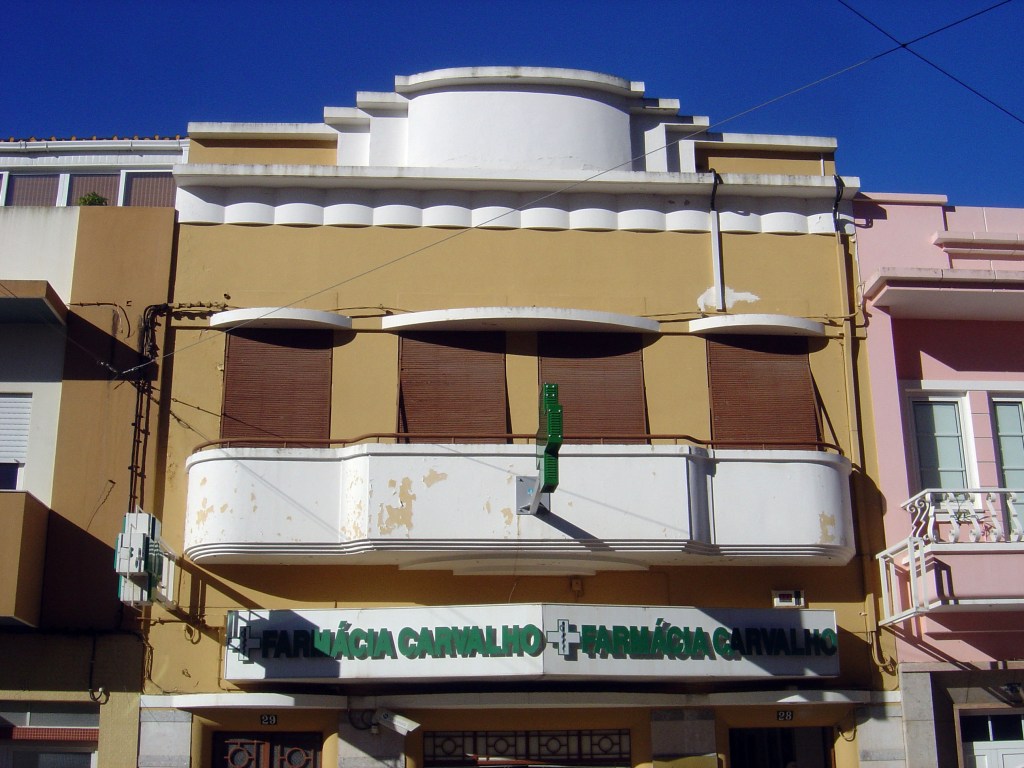
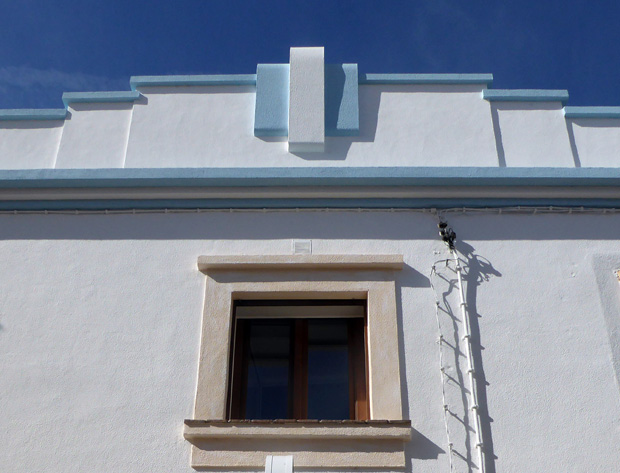
As is often the case there is no architect listed for this delightful early 20th century building., with its stepped parapet. Its proportions and curves are reflected down onto the details below.
Portimão is the second largest city in the Algarve and is sometimes referred to as its Eastern capital. Farmácia Carvalho is one of Portimão’s oldest pharmacies, having opened its doors in 1939.
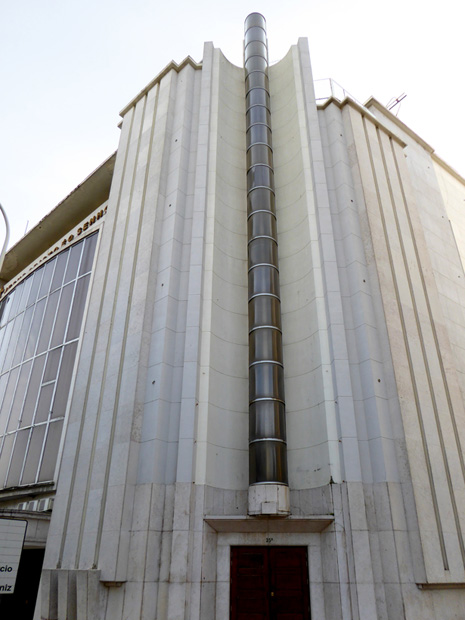
This former cinema features strong, vertical lines
Cinema Império – the Empire Cinema, a former cinema in Lisbon, is located at the intersection of Alameda Dom Afonso Henriques and Avenida Almirante Reis 35, Lisbon, Portugal. The Cinema Imperio was constructed between 1947 and 1952. It was designed by Cassiano Branco, one of Portugal’s great modernist architects who was responsible for the shell of the building. Frederico George was responsible for the interior and R. Chorao Ramalho for the ground floor level cafe.
The abstract towers at the corners are striking
The Cinema Império functioned as a cinema, theatre, and concert hall in the Portuguese capital of Lisbon, opening on 24 May 1952. The cinema’s debut was on 24 May 1952 and featured the French film called ‘La Beauté du Diable’, directed by René Clair. During its three decades as a cinema it screened films such as Federico Fellini’s ‘Amarcord’ and ‘Juliet of the Spirits’ as well as ‘Jules et Jim’ by François Truffaut and films by Ingmar Bergman and Orson Welles. ‘I Cannibali’ by Liliana Cavani, ‘Rosemary’s Baby’ by Roman Polanski, and ‘55 Days at Peking’ by Nicholas Ray were among the cinema’s most successful films.
The base of an abstract tower
Closing as a cinema in December 1983, Cinema Império began a new life in 1992 as a church, like many other classic cinemas, when it was taken over by the Universal Church of the Kingdom of God
The one on the right has a stepped zig-zag motif on its parapet
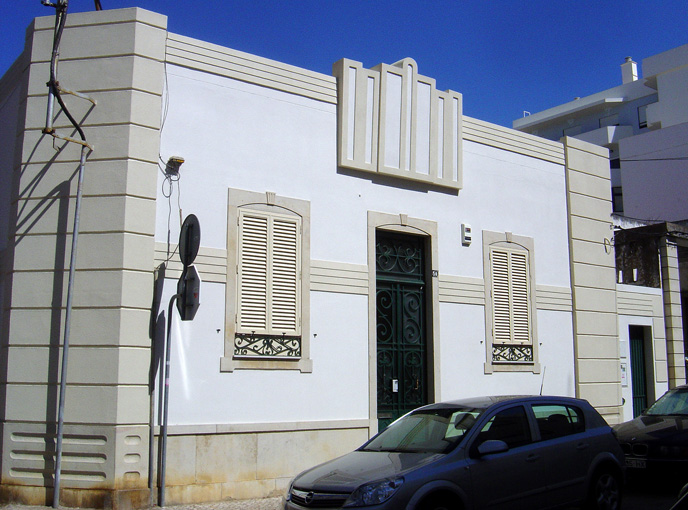
These Art Deco houses are located in Loulé, a town in the interior of Portugal’s southern Algarve region. All of them are single-storey bungalows, and it is their unique parapets which make them attractive.
A collection of vertical rectangles adorns this one
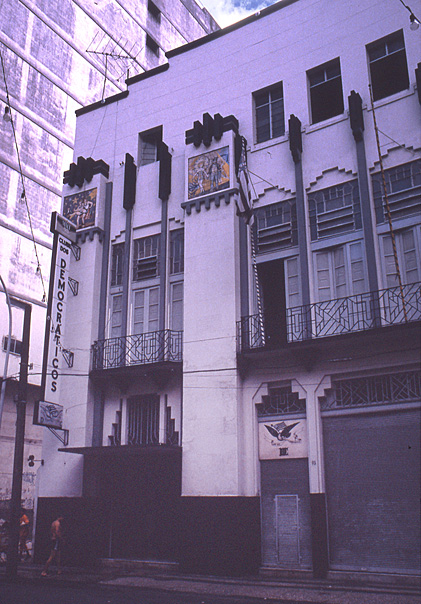
The ‘Clube dos Democráticos’, is located on the Rua Riachuelo in the Lapa district of Rio de Janeiro. Originally a Carnival Society, the ‘Clube dos Democráticos’ was founded in 1867. In more recent times it has ceased to be a parade club organizer and has devoted itself to other Carnival related activities such as putting on shows of Samba bands. It is one of Rio’s oldest live music venues, and regularly hosts top quality samba and forro bands.
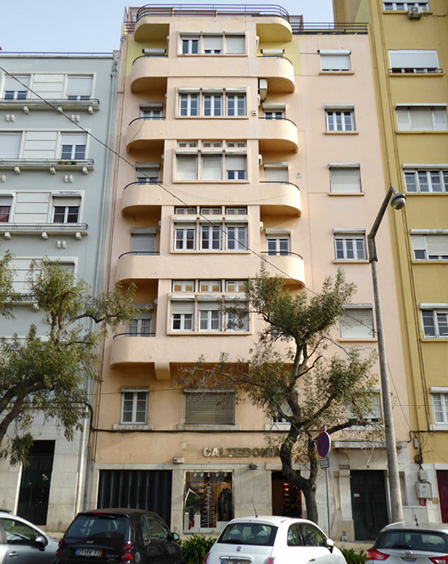
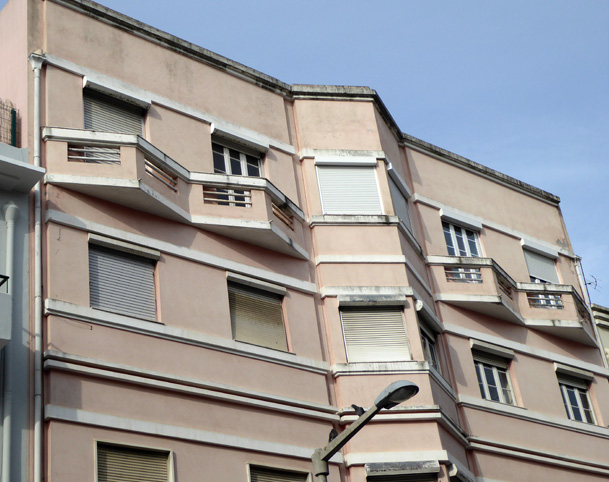
A delightful seven storey apartment block located at Avenida Guerra Junqueiro 2 in central Lisbon, in the Areeiro district, which was formerly known as the São João de Deus district. With the exception of the first floor the apartments all have central window bays with curving corner balconies. The ground floor is plain, and taken by Calzedonia, an Italian clothing store.
Libya’s second largest city, Benghazi, is on its eastern coast. This building in the centre of the city has attractive irregular hexagonal windows and other geometric forms enlivening its facade. The gates are surmounted by triangles.
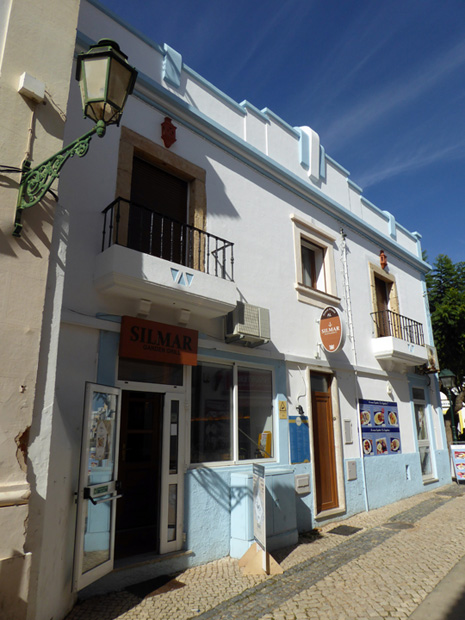
Located at Rua Marques de Pombal by the Praça Alliança, in the town of Alvor on the seaside of Portugal’s western Algarve, this blue and white two-storey building is a modest, but delightful Art Deco building. It features a parapet with a central massing, and two balconies with triangle motifs.
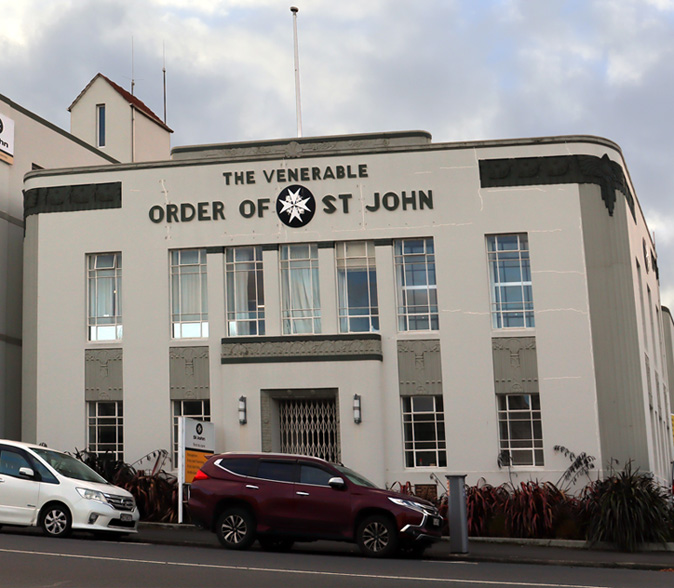
The St John New Zealand Southern Region Headquarters can be found at 17 York Place in central Dunedin. The façade contains a number of shallow reliefs with floral components, notably on either side of the entrance. Constructed in 1938, it is another fine example of Art Deco architecture in New Zealand. The building is registered by the New Zealand Historic Places Trust as a Category I structure, and was listed in 1990. Dunedin is the second largest city in New Zealand’s South Island.
A detail of the entrance
Thanks to Robert Piggott for providing the photos used here.
A rather jazzy central Lisbon apartment block from the diagonals on the main entrance to the angular features of the façade. These include the angled bay windows up the centre of the building and the small, angled balconies accompanying them, along with the white horizontal bars running across the exterior.
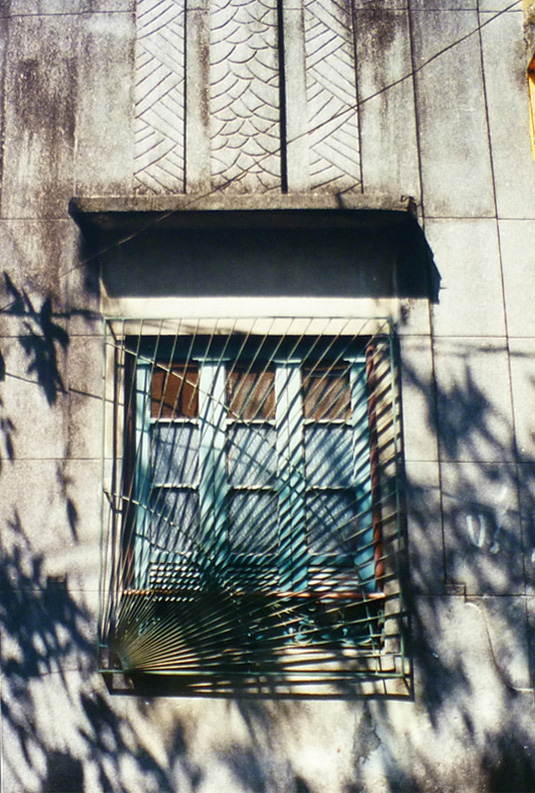
This small but enchanting Brazilian house is in the heart of Rio de Janeiro. Faced in a grey stone, it features a modest parapet rising from the vertical bands of stone. There are Art Deco motifs carved into the surface of the three central bands that begin at the window lintel. An original metal sunburst screen protects the window.








 Global Art Deco