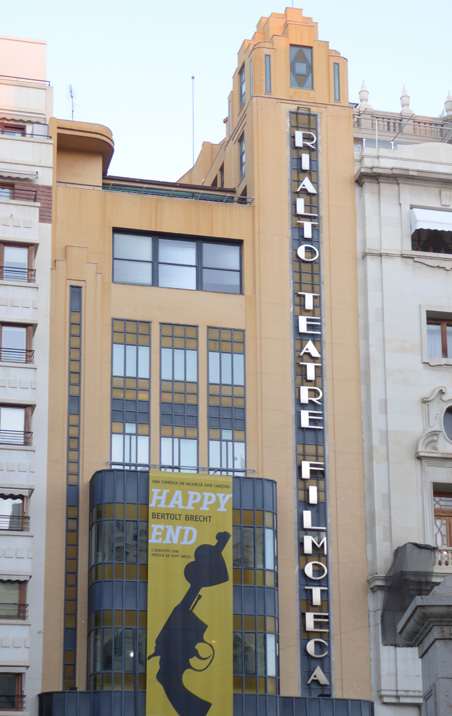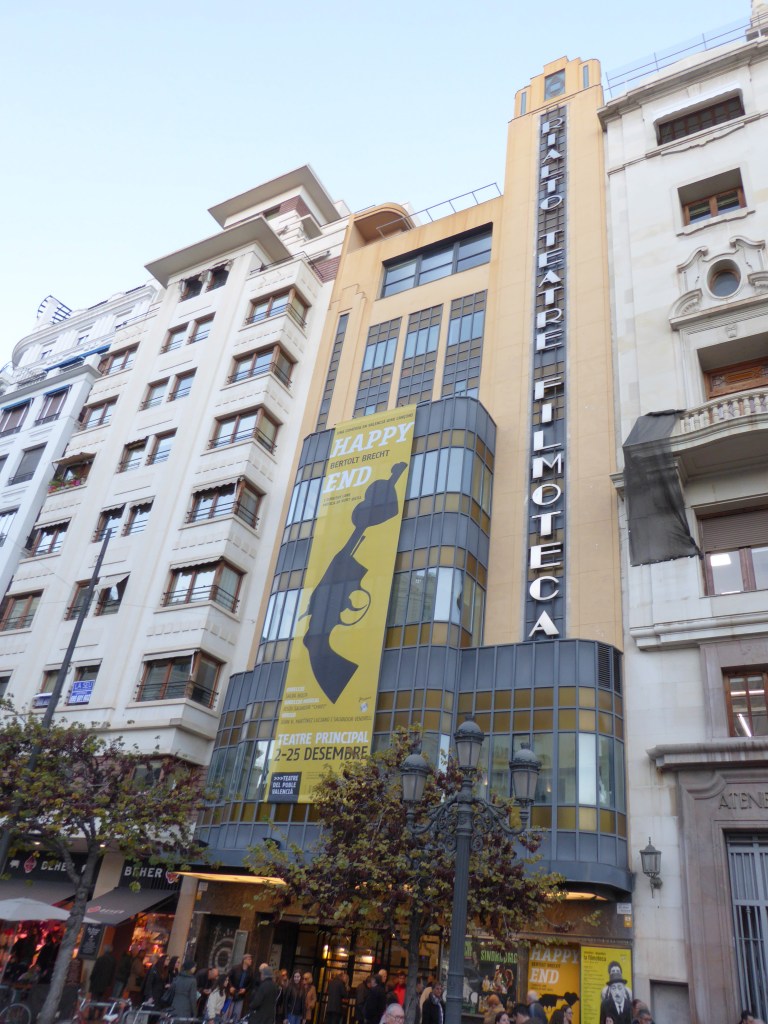
Teatro Rialto, Valencia

Grids of windows on the Teatro Rialto

If you should visit the Spanish seaside town of Valencia you might discover the marvellous Teatro Rialto there. Located in Plaza del Ayuntamiento (Town Hall square) in the central city area, it was designed by the architect Cayetano Borso di Carminati and constructed in 1939. Originally a cinema, it was taken over by the Valencian government who converted it into a theatre in the 1980s. It also has a screening hall for the local government’s film library. The Teatro Rialto makes an interesting comparison with the Kaaitheater in Brussels: https://globalartdeco.com/art-deco-cities/brussels-2/

The complete façade

Department of Tourism, São Paulo

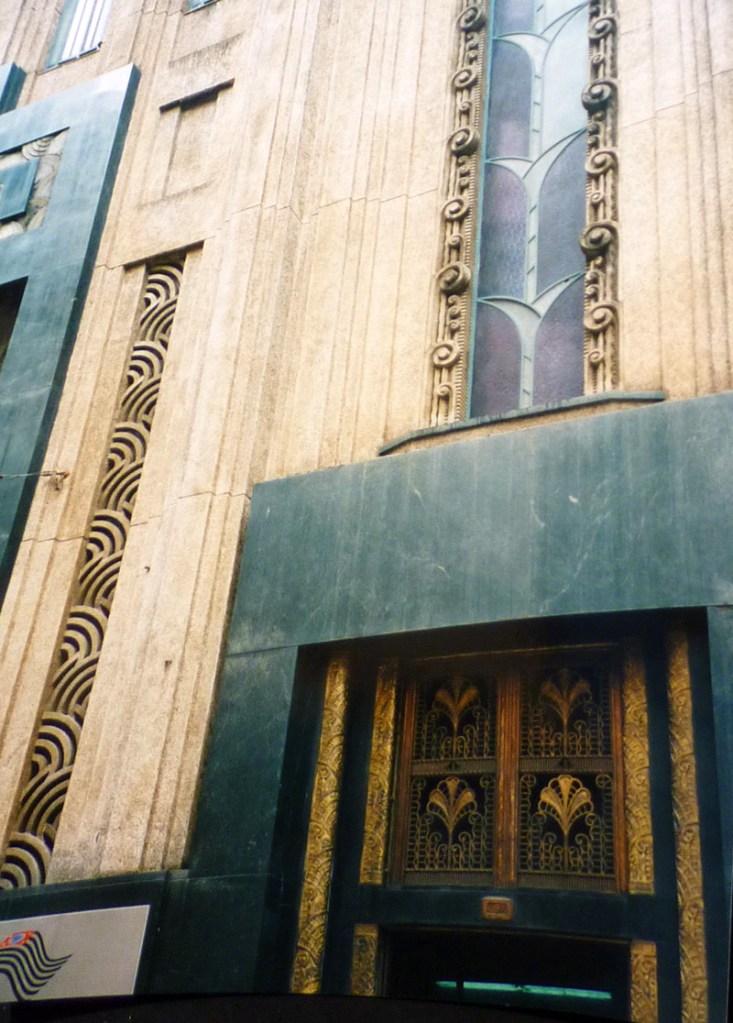
View of part of the façade

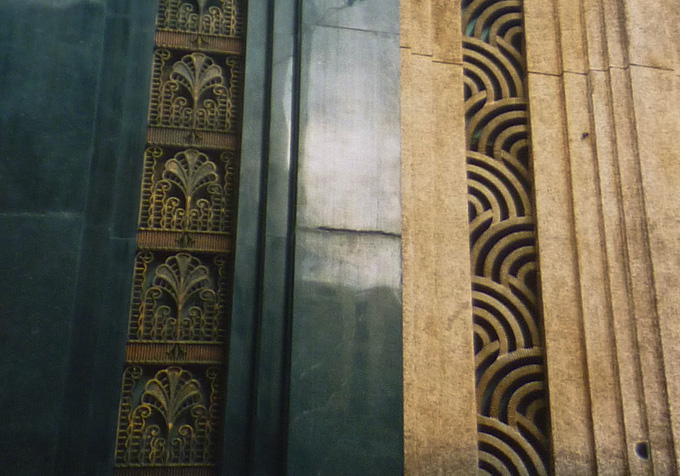
The building where the Department of Tourism of the State of São Paulo (Secretaria de Turismo do Estado de São Paulo) now resides was originally constructed for the 1938 Banco de São Paulo. Located at Praça Antonio Prado 9, it was designed by the architect Álvaro de Arruda Botelho. This building is composed of two interconnected wings, one twelve storeys high and the other sixteen. The façade is extensively decorated with Art Deco designs created from materials such as granite, marble, and bronze.

A metal window grill with plant forms
A variety of Art Deco motifs
Another view of the lower façade

Berea Court, Durban

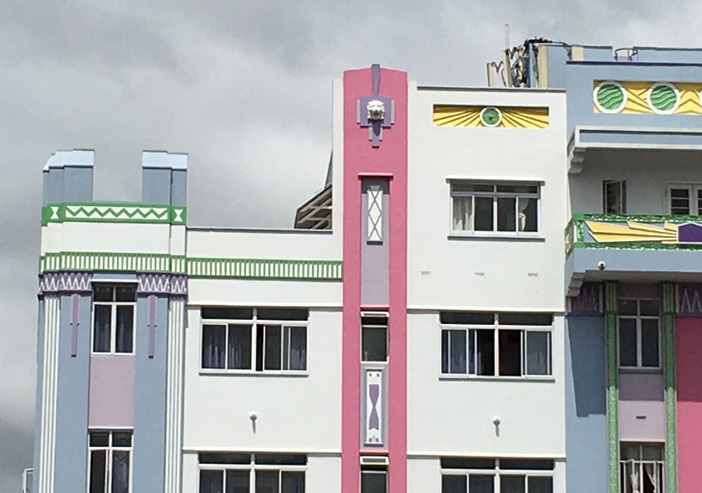
The bright façade of Berea Court

We are fortunate to have another guest post from the Durban Art Deco Society. Durban is South Africa’s third largest city and has many fine Art Deco buildings, including this one.

Berea Court

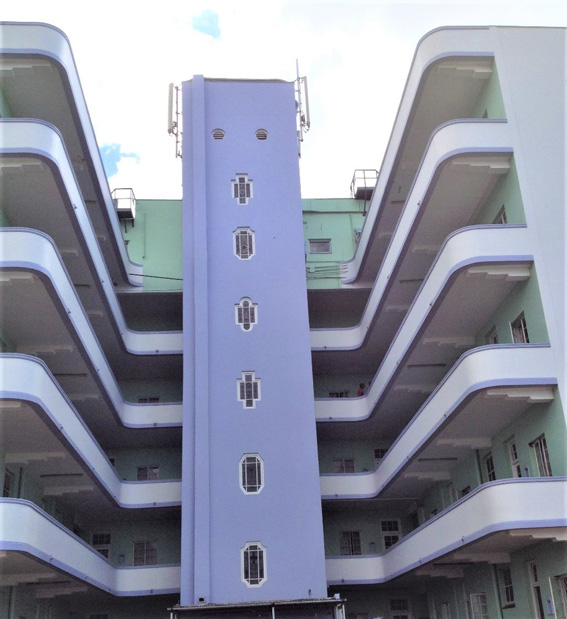
This is a multi-storey 41-apartment building with excellent detailing, designed for the Langton family by Alfred Arthur Ritchie McKinlay around 1930 and located at 399 Berea Road. The stucco finish has good mouldings in authentic Art Deco style. A stylised theme of wings is evident in the design, with geometric string courses. The central balcony at high level is richly decorated with a sunburst pattern and forms a high level focus to Berea Road.

Fluted pilasters rise through the façade to a crenellated parapet with lion features.  The entrance below has an African feel to the surround mouldings. There is a well-designed rear elevation with cantilevered walkways and an amusing range of stained glass windows to the lift shaft, and flat entrances, which have original milk-bottle alcoves. The top floor is open for water tanks and the lift shaft.

The building is used for student accommodation and is well maintained by the owner.

The superb, African styling of the main entrance
An original stained glass window at Berea Court
Streamlined balconies at the back
A detail of the top of Berea Court

Photos and text © Durban Art Deco Society

Princes House, Brighton

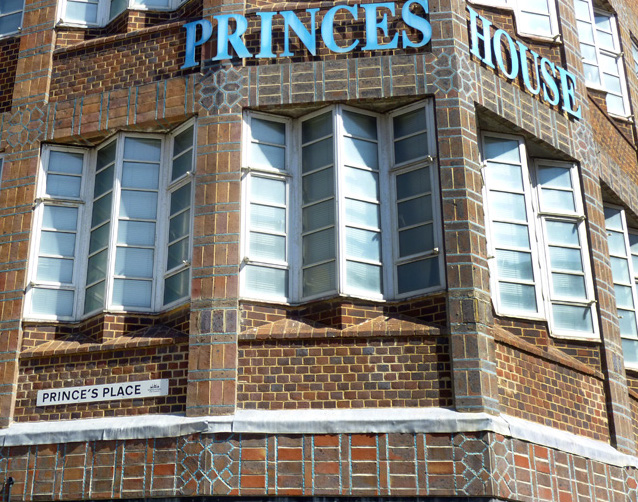
Princes House on the corner in Brighton

Brighton-born architect Harry Stuart Goodhart-Rendel designed Princes House in 1935, though it was originally the home of the Brighton & Sussex Building Society. Located at 166–169 North Street, this brick faced, steel-framed building was constructed in 1936 and features such unique Goodhart-Rendel details as pleated fenestration and superb brickwork. It became a Grade II building in 1994.

A truly eclectic architect, Harry Stuart Goodhart-Rendel, was an architectural prodigy, who had an early design constructed when he was only 16 years old. An accomplished composer and pianist, he studied music at Cambridge, and, during this time, designed an important office that was built in Calcutta. Architecture won out over music, and he set up his own practice in 1909. One of his best known buildings is Hays Wharf/St Olaf House, on the Thames in London. This was constructed 1928-32, just a few years before Princes House. A property developer purchased the Brighton building in 2002 and had the upper storeys converted into 34 apartments.

Two types of windows
Detail of the pleated windows

County Courthouse, Faro

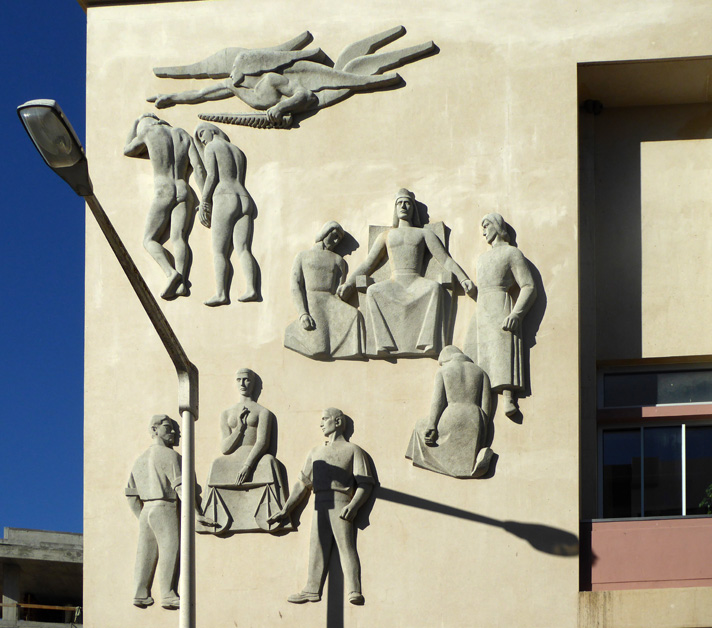
County Courthouse, Faro

This is the Tribunal Judicial da Comarca de Faro – Secção Central, or the County Courthouse of Faro, Central Section. It is located at Avenida 5 de Outubro 10, in Faro, the capital of the Algarve region at the south of Portugal. The sculptures show a sequence from divine justice, with Adam and Eve expelled from the Garden of Eden, then a King dispensing justice from his court, to modern law with a claimant and a respondent in front of the symbol of justice.

A brief history of law

Casino Bar, Brighton

The façade of the Casino Bar, Brighton

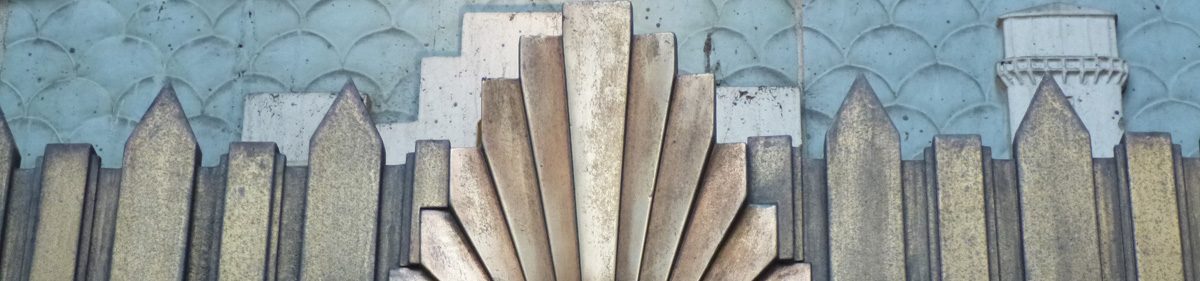
This four-storey building in central Brighton features a facing of glazed, white vertical tiles and two sunbursts forming capitals to stripped Classical pilasters on either side of the ground floor. There are other fine Art Deco details on the upper floors. It is not known what the original function of this building was.

A sunburst in white
The façade is full of neat details

Enterprise Building, Durban

Griffons and zig-zags on the Enterprise Building.

We are pleased to have another guest post for this blog from the Durban Art Deco Society. Durban is South Africa’s third largest city and has many Art Deco buildings.

Enterprise Building, Durban
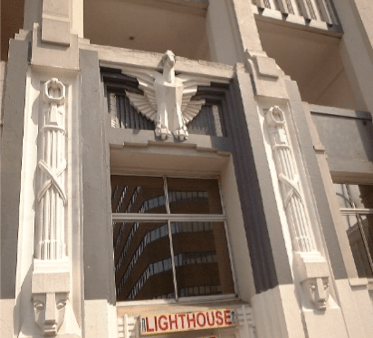
This eight-storey, 1931 apartment building, designed by A A Ritchie McKinley, has a classic Art Deco design. It is located at 47 Samora Machel (Aliwal) Street. The distinctive elevational treatment is in the form of a rich range of stylised geometric animal and abstract figures. Griffons and zig-zag forms at high level with Mayan type heads and a superb eagle form over the entrance. The “fasces” motifs (bundle of rods, often tied, with an axe as an emblem of power, which were carried by lictors, ancient Roman officials, before the superior magistrates) might indicate sympathy with the advent of Mussolini on the part of the architect or client.

Photos and text © Durban Art Deco Society

A mighty bird guarding the building.
The fasces, and another view of the eagle.

Avenida António Augusto de Aguiar 100, Lisbon

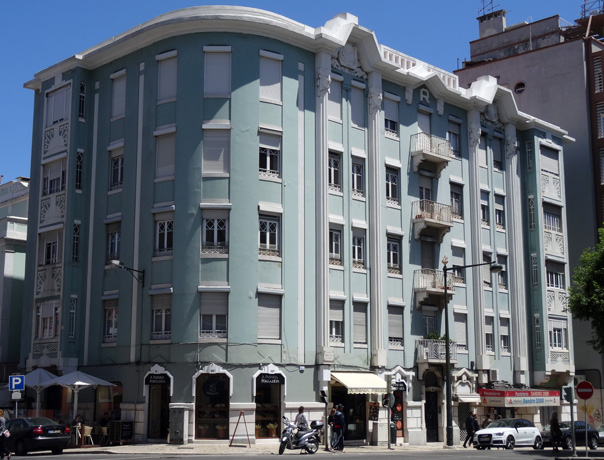
Avenida António Augusto de Aguiar 100 curves round the corner.

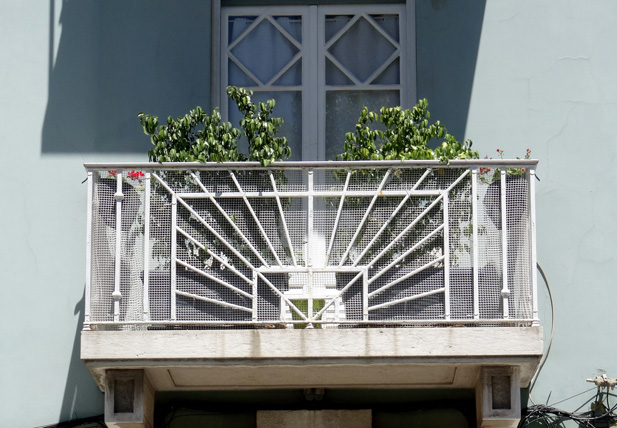
A striking building in Lisbon’s Saldanha district, this five-storey mix of retail and residential sits on the corner of the major artery that is Avenida António Augusto de Aguiar and the Rua Augusto dos Santos. Among the Art Deco details featured on it, highlighted in white against the prevailing green, are three different geometric sunbursts, one in wrought iron on a balcony and the other two below windows.

A metal sunburst.
Two similar sunbursts.
A metal window grate.

Edifício Itahy, Rio de Janeiro

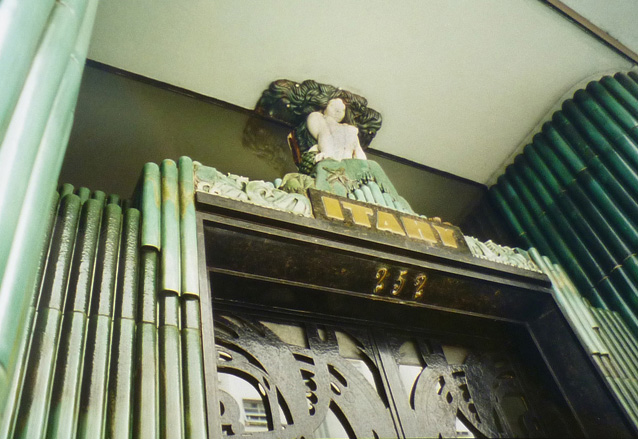
A spectacular entrance in Copacabana.

If you ever decide to visit Rio de Janeiro you will have to visit Copacabana beach, and maybe you will stay in the area. If this should happen you will inevitably encounter the Avenida Nossa Senhora de Copacabana as it is one of the most important thoroughfares in the area. Check out the building at number 252 which is called Edifício Itahy, constructed in 1932. It was designed by São Paulo born architect Arnaldo Gladosch, and the spectacular entrance watched over by the dark haired mermaid you see here was created in 1935 by Luiz Correia de Araújo.

The mermaid of Itahy.

Astra House, Kings Road, Brighton

The Preston Street side of Astra House on the left.

Brighton Art Deco apartment block Astra House was completed in 1938. It is tall for a UK seaside building at ten storeys high, with 61 flats rising above a ground floor of retail premises. The top two storeys step back and are thus less visible. It has continuous bay windows from the second to sixth floors.

Entrance to Astra House apartments.